


- What Is Faux Leather?
- Bed & Mattress Size Guide
- Polypropylene Rugs Guide
- TV Stand Sizing Guide
- Coffee Table Height & Size Guide
- Dining Table Height & Seat Height
- Types of Tables Explained
- How Tall Should a Nightstand Be?
- Sofa Dimensions Guide
- Living Room Rug Size Guide
- What Bar Stool Height Do I Need?
- What is Rubberwood?
- Coastal Interior Design 101
- Boho Interior Design 101
- What Colors Go With Brown?
- Mid-century Modern Design 101
- Farmhouse Interior Design 101
- Hallway Decorating Ideas
- Coastal Living Room Decor Ideas
- Dining Room Lighting Ideas
- How to Decorate with Bed Pillows
- Living Room Paint Colors
- Industrial Home Decor Ideas



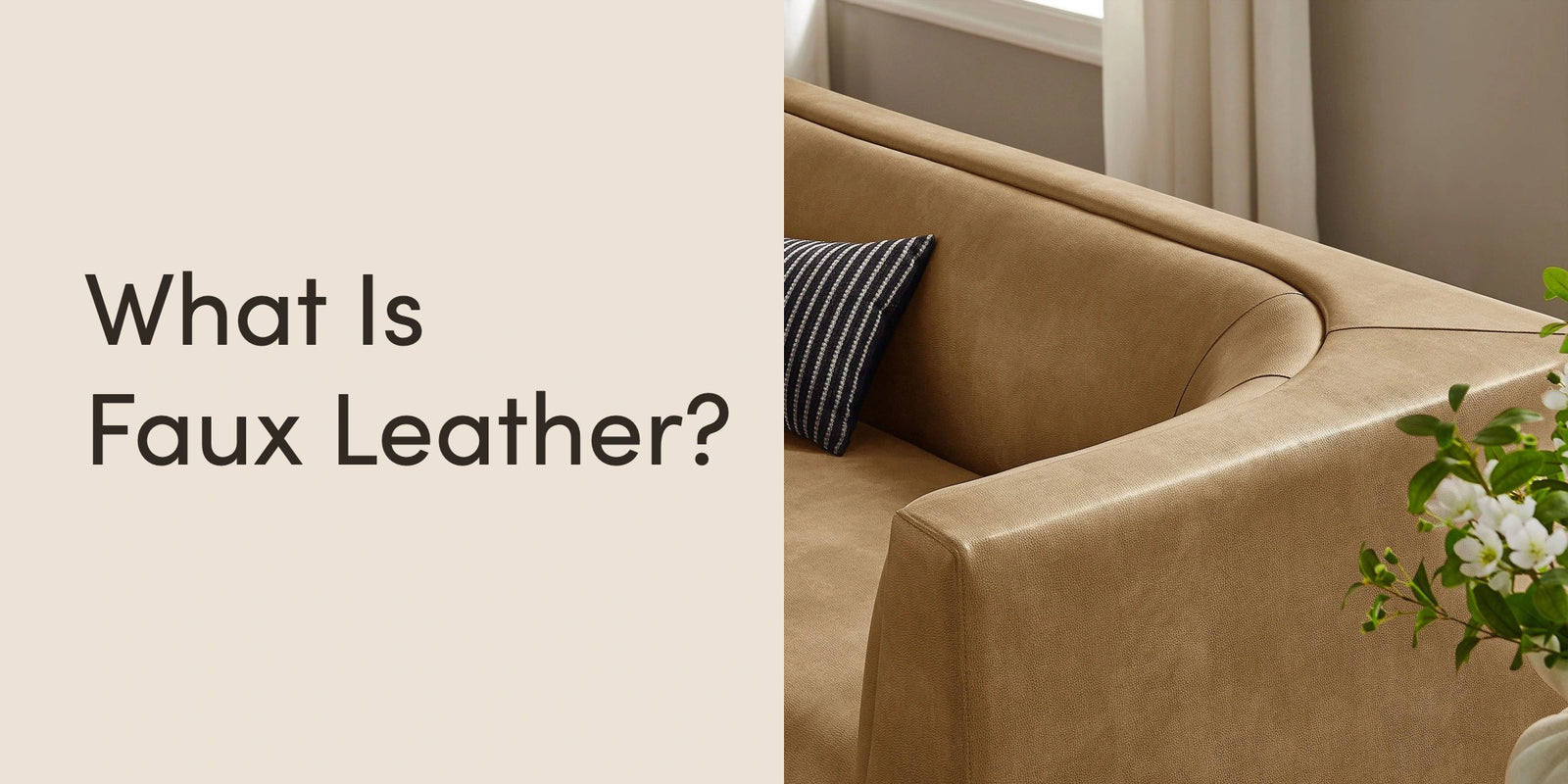


What Is Faux Leather? Pros, Cons & Decorating Ideas
Faux leather is a manufactured material that imitates animal leather, usually with a plastic coating over some fabric. When shopping for furniture or textile products, you'll also find it as vegan leather, leatherette, or synthetic leather. Read this guide to learn all about it, purchasing considerations, and furnishing/decorating tips.
What Is Faux Leather Made Of?
Most faux leather upholstery combines a textile backing with a flexible coating of polyurethane (PU) or polyvinyl chloride (PVC). The backing gives the material its body; the coating supplies the color and leather-like surface. An embossed pattern creates anything from a fine, smooth grain to a pronounced pebbled texture.

Two faux leather chairs labeled PU can feel quite different. The label tells you what the coating is made of, but how it feels and wears depends on ingredients, finish, and build quality.
Is Vegan Leather the Same as Faux Leather?
Vegan leather is a leather alternative made without animal-derived ingredients. In furniture, it commonly refers to the same PU- or PVC-coated fabrics sold as faux leather. "Vegan" describes animal-free ingredients; "faux" describes the leather look.
Vegan doesn't automatically mean plant-based or environmentally preferable. PU and PVC are plastics, and plant-based versions may still use plastic coatings or binders.
What Do PU Leather, Vinyl, and Leatherette Mean?
Leatherette, pleather, artificial leather, and synthetic leather are common names for faux leather. Something to note though, bonded and bicast leather contain animal hide, despite their synthetic binders or coatings so they are both partially genuine and partially faux.
| Label | Usual construction | Contains animal hide? |
|---|---|---|
| Faux, synthetic, artificial, leatherette, pleather | Manufactured leather look, commonly a coated textile | No |
| PU leather | A polyurethane coating over textile or split leather | Check the backing |
| Vinyl/PVC | PVC-coated textile | No hide in this construction |
| Bonded/reconstituted leather | Leather fibers or scraps combined with a binder | Yes |
| Bicast/bycast leather | Split animal hide with a PU surface coating | Yes |
Vinyl is a particularly interesting material used to make faux leather. For whatever reason, though PU made to imitate leather will often say "PU Leather", vinyl upholstered pieces will often simply say "Vinyl" without mentioning leather at all. In reality, even vinyl upholstery described as smooth commonly feature fine leather-like grain.
Is Faux Cowhide the Same as Faux Leather?
Usually, no. A faux cowhide rug typically imitates a cow's hide with the hair still on, using synthetic fibers or a printed textile. Faux leather upholstery imitates the smooth or grained surface of leather. If you're shopping for a cowhide rug without animal hide, check the listed material. A cow print or hide shape alone can't tell you what it's made of.
Faux Leather vs. Genuine Leather
What Is Genuine Leather, and Is It 100% Real?
Genuine leather is animal hide preserved through tanning. "Real" and "natural" leather describe the same origin. Genuine alone doesn't identify a particular quality grade.
Real leather can be dyed, embossed, or given a protective coating. Underneath that finish, it's still real animal hide.
When a listing says a chair has genuine leather, check where it's used. The seat might be leather while the sides and back are covered in another material.
Is Faux Leather Better Than Real Leather for Furniture?
Faux leather makes sense when you want an animal-free upholstery option, convenient wipe-down seating, or the leather look at a lower initial cost. Genuine leather may be more appealing if you value patina and the possibility of refinishing. Quality and surface finish affect both choices.
| Consideration | Faux leather | Genuine leather |
|---|---|---|
| Initial cost | Usually lower | Usually higher, particularly for better-quality hides |
| Appearance | Applied grain and color; often consistent | Natural variation, often with coatings/embossing |
| Feel and breathability | Vary by coating; some surfaces feel warm or clammy | Vary by finish; lightly finished hides generally breathe more readily |
| Aging | Can scuff, crack, or peel; a distressed finish imitates aged leather | Some finishes develop patina; others retain a more uniform appearance |
| Maintenance | Coating-specific cleaning; ordinary leather conditioner may be unsuitable | Care depends on the leather and its finish |
| Repair potential | Local damage may be repairable; widespread coating failure less so | Some damage and worn finishes can be repaired or refinished |
Is Faux Leather Better for the Environment Than Real Leather?
Making faux leather can release fewer greenhouse gases than making genuine leather. Raising cattle accounts for much of genuine leather's carbon footprint, and tanning the hides produces wastewater that needs treatment. Faux leather's coating usually comes from fossil fuels. Once it's bonded to fabric, the two layers can be hard to separate for recycling.
From an animal welfare standpoint, choosing animal-free faux leather is one way to avoid adding to demand for cattle hides. You don't have to worry about how cattle are raised.
What's Faux Leather Like in Everyday Use?
Is Faux Leather Comfortable, or Does It Feel Hot and Sticky?
Faux leather can feel soft and comfortable, but some coatings feel warm or sticky against bare legs during long sitting sessions. Breathability varies with the material; some performance fabrics are engineered for airflow. That difference matters more on a sofa where you lounge for hours than on an occasionally used bench.
Is Faux Leather Good for Kids and Pets?
Faux leather is handy if you're always wiping pet hair off the sofa or crumbs off the dining chairs. If crumbs are a regular problem, a smooth seat is easier to wipe down than one with deep button tufting.
Claws can still puncture or scratch the surface, and spills can stain. Pale finishes can also pick up dye from clothing.
Does Faux Leather Peel, and How Long Does It Last?
Faux leather can peel, and there isn't a dependable lifespan that applies to the entire category. Coating quality, friction, cleaning products, heat, and humidity all affect how it holds up.
Heat and moisture can break down a polyurethane (PU) coating until it starts to flake or lift away from the fabric underneath. That breakdown is called hydrolysis. Body heat and perspiration can contribute, so even a chair that sees little rubbing can peel.
If you're buying a sofa you'll sit on every day and the maker shares test results, look for two things. An abrasion rating tells you how the surface held up to rubbing. A hydrolysis test tells you how a PU coating held up under heat and humidity. The number of weeks it passed in the lab can't tell you how many years the sofa will last at home.
Can You Repair Faux Leather Furniture?
Yes, if the damage is confined to a small area. A repair kit made for PU or vinyl can help disguise a scuff or mend a small tear using a patch and flexible filler tinted to match the upholstery. Think of it as making the damage less noticeable, rather than making the furniture look new again. For a conspicuous tear on a favorite piece, a professional upholstery repair may be worth considering.
A peeling seat is a different problem. The surface coating is breaking down, so repairing one spot won't prevent more from peeling nearby. At that point, replacing the covering is usually more useful than patching it. A replacement cushion cover may be enough if the damage is limited to one cushion. If most of the upholstery is peeling, compare the cost of reupholstering with buying another piece—especially if you still like the furniture and find it comfortable.
How Do You Clean and Care for Faux Leather?
Start with the furniture maker's care instructions. Coatings differ, and a cleaner suitable for one can damage another. For routine care:
- Remove loose dust and crumbs gently with a soft, dry cloth.
- Blot spills promptly. Use a lightly dampened cloth only as permitted, keeping moisture out of seams.
- Use the specified cleaner for marks, remove residue as directed, and dry the surface.
Keep upholstery out of prolonged direct sun and away from strong heat. Avoid ordinary leather conditioner, oils, alcohol wipes, and abrasive scrubbing unless expressly approved for that upholstery.
How to Decorate With Faux Leather Furniture and Accents
Faux Leather Sofas
A brown faux leather sofa pairs naturally with rustic furniture: a thick slab of live-edge wood brings out the rugged side of leather. Put that same wood on steel hairpin legs or boxy frame base and your couch+table pairing becomes industrial. If you like the warmth of wood but want a softer look to pair with the already-rugged leather couch, try an oak table with rounded edges. A clear glass or acrylic table lets you see the rug underneath, which can make even a big Chesterfield feel less imposing. For a more relaxed room, try a woven rattan coffee table. It has a breezy, porch-like feel that takes some of the formality out of leather.

A faded red and indigo Persian-style rug makes a sleek leather sofa feel more at home with vintage pieces. If you want the rug to stand out against a plain sofa, look for a kilim with bold blocks of rust and blue. If the sofa already has a lot going on, as a tufted one can, try flatwoven jute with a wide fabric border. You still get the contrast of a rough weave against smooth leather, and the border gives the rug a clean edge. A hide-shaped rug takes a brown sofa in a more western direction, while a geometric leather patchwork rug makes the pairing feel more modern. Look for faux versions of those last two if you're avoiding animal hide. See our living room rug size guide for help with sizing.
Throw pillows let you add a strong dose of color without committing to a colorful sofa. Against tan or cognac faux leather, try peacock blue or forest green—the cool colors make the warm leather stand out. On a black sofa, mustard or burnt orange can make the seating feel warmer and more inviting. Mix a solid pillow with a patterned one that includes the same color, so you get some variety without buying a matching set. For more combinations, see our guide to colors that go with brown.
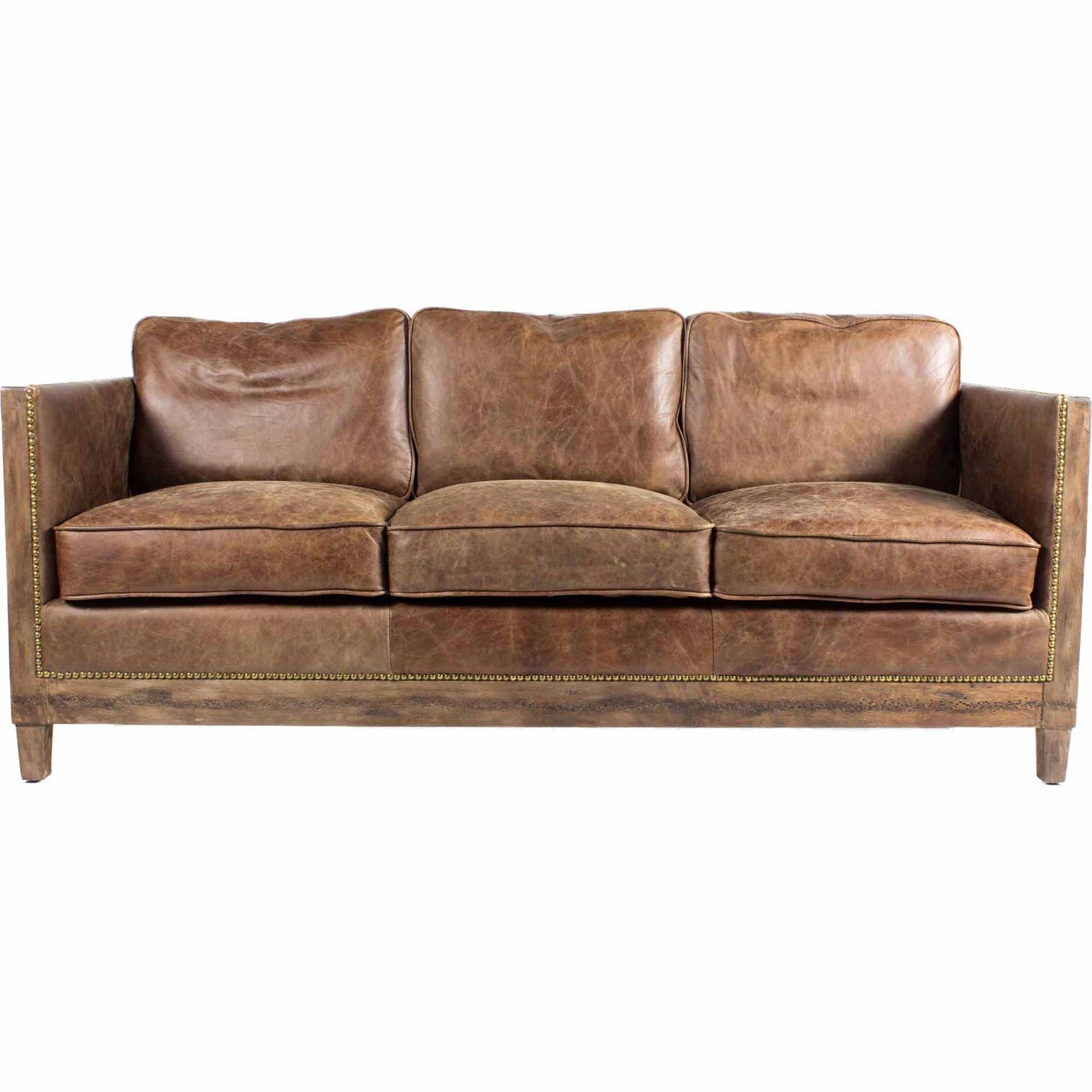


Faux Leather Accent Chairs
A cognac leather-look chair with an angular wood frame makes a good starting point for a mid-century modern living room. Pull up a round bouclé footstool to soften those straight lines. A walnut drink table and an adjustable brass lamp pick up the warmth of the seat.

If it's a black club chair you're working with, try a fluted glass side table. The glass catches the light right where the dark chair can make a corner feel heavy. A deep green velvet cushion adds color without losing the dressier feel.
A cognac faux leather lumbar on a fabric sofa can tie it to a nearby chair in the same shade. Set it against a navy block-print pillow so the bit of leather stands out. Check the material if you're shopping for an animal-free option, since Froy's leather throw pillows include genuine hide.
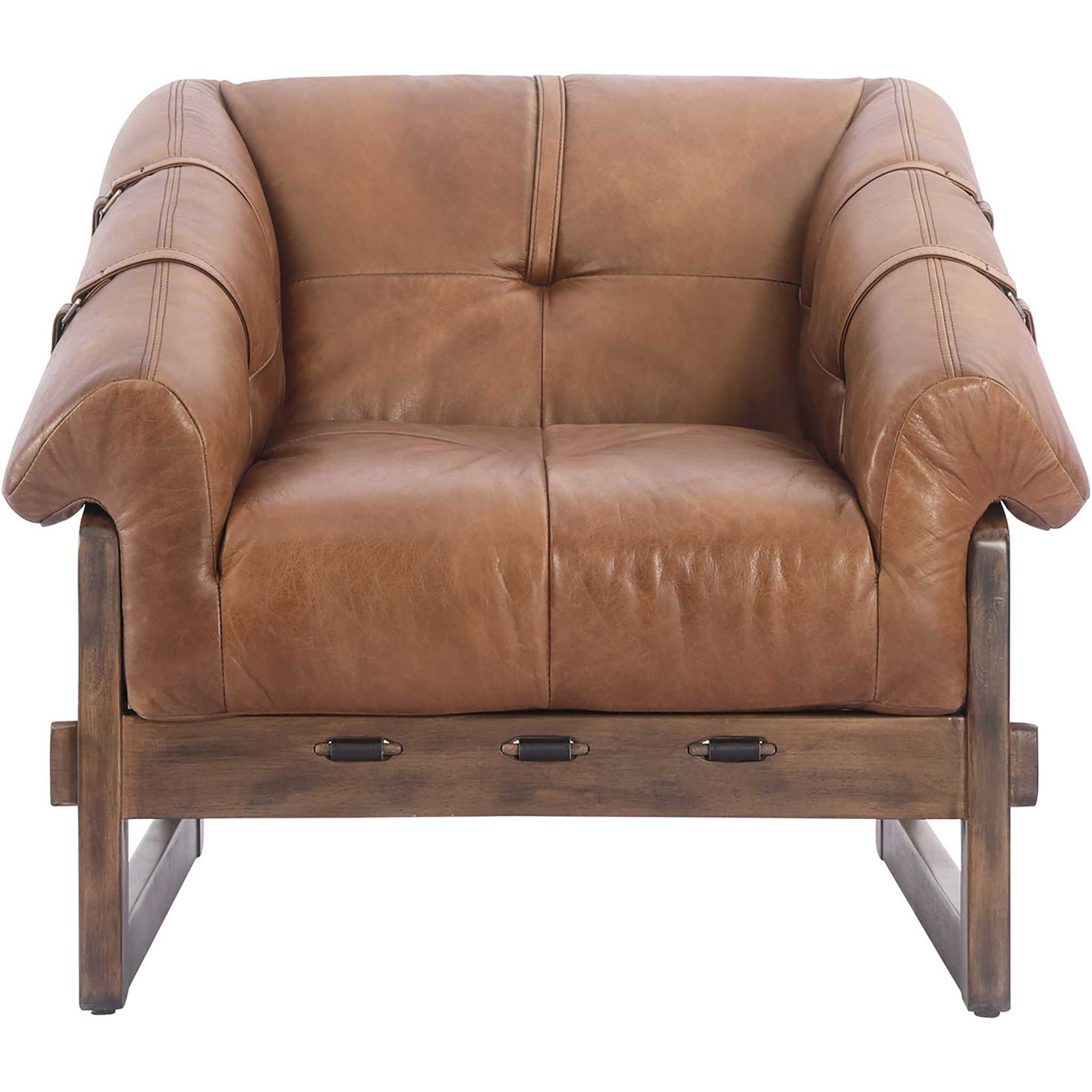


Faux Leather Dining Chairs and Benches
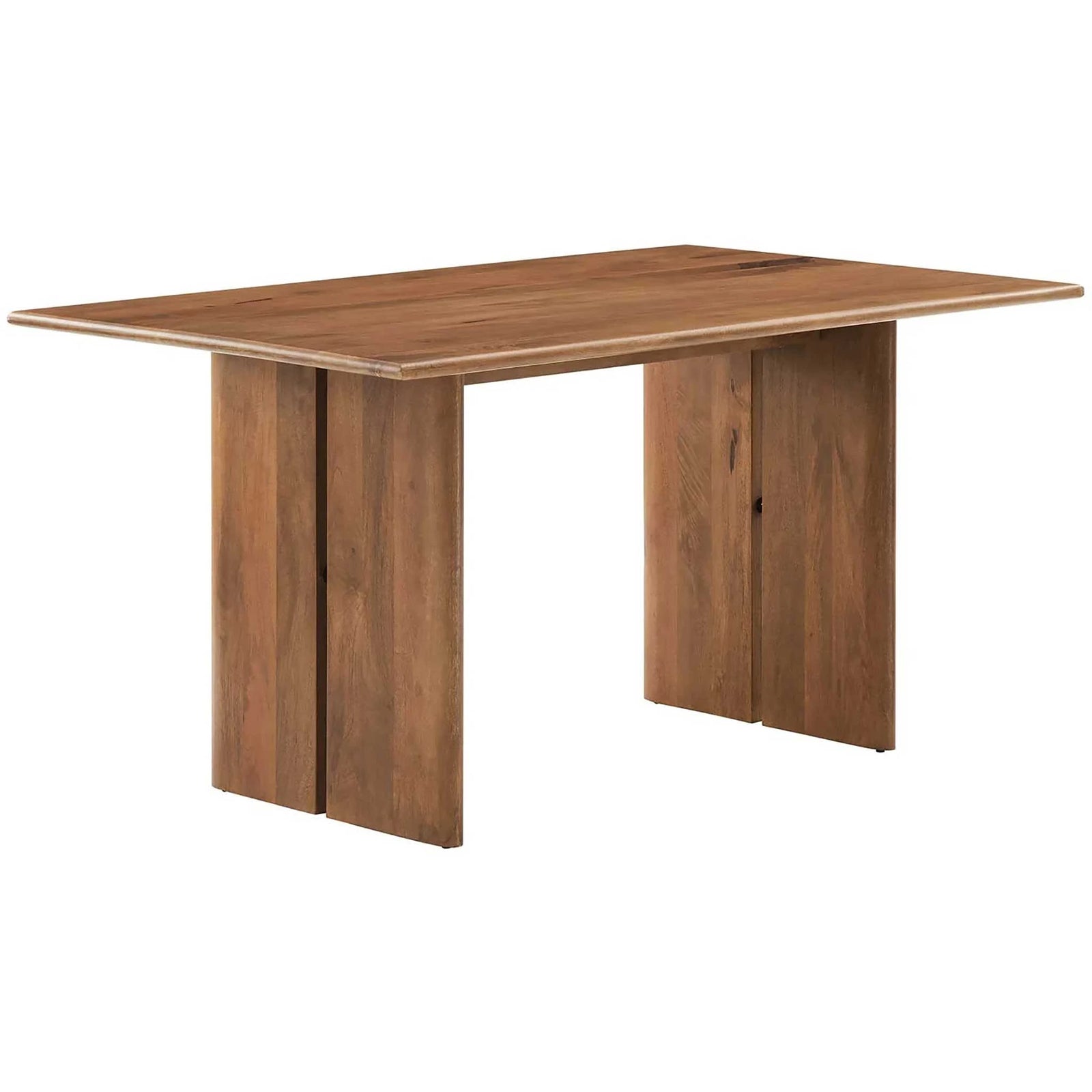
Tan leather-look dining chairs with black legs can look quite industrial next to a reclaimed wood table. If you want those same chairs to feel more at home in a light, relaxed room, try pale oak with rounded corners and hang a linen drum pendant over it. For a dressier dining room, try ivory leather-look seats around a marble pedestal table. The soft ivory tones down the contrast with the stone.

For a farmhouse dining room, try faux leather chairs at the ends of a rectangular wood table and spindle-back chairs along the sides. A shared leg finish helps the chairs look like they belong together. In a breakfast nook, a smooth leather-look bench gives you a plain backdrop for striped or botanical cushions. Set the cushions along the back so you can lift them out when you need to wipe down the seat.
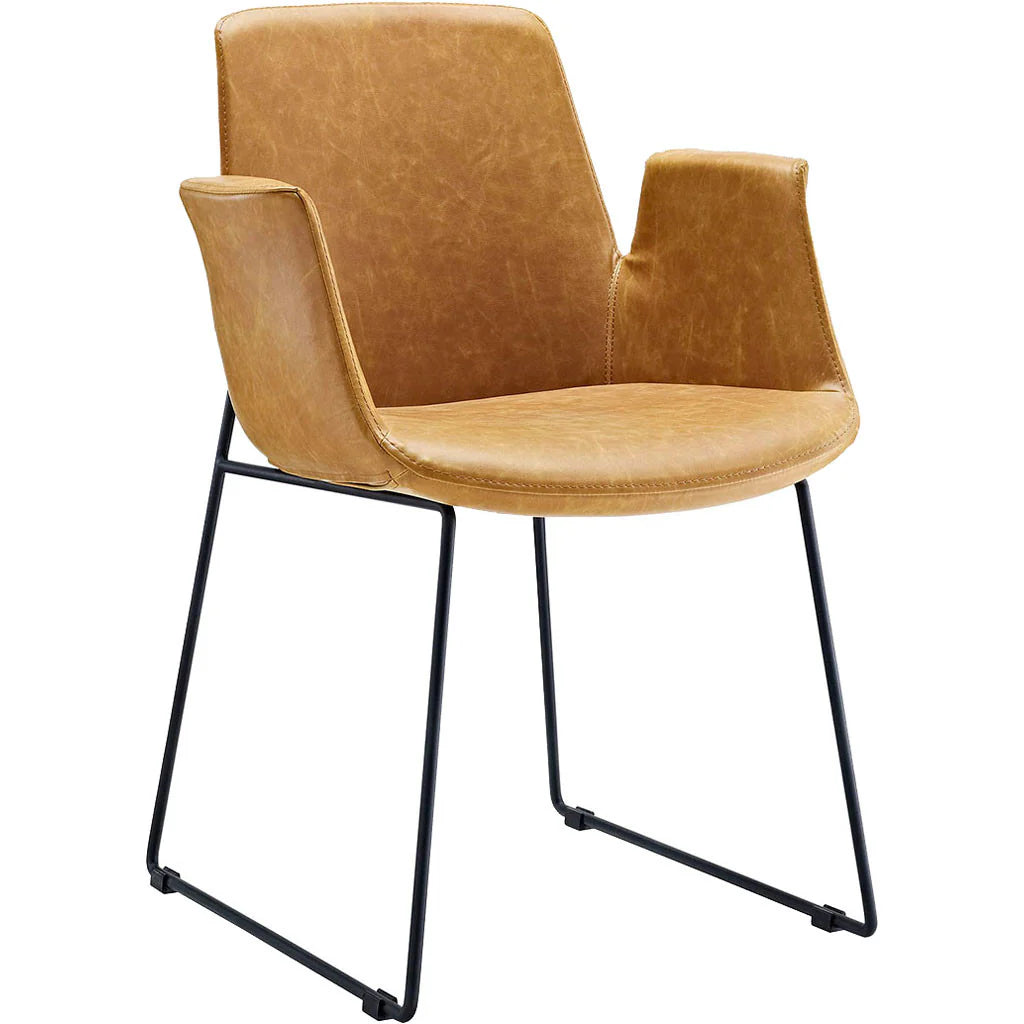




Faux Leather Beds and Headboards
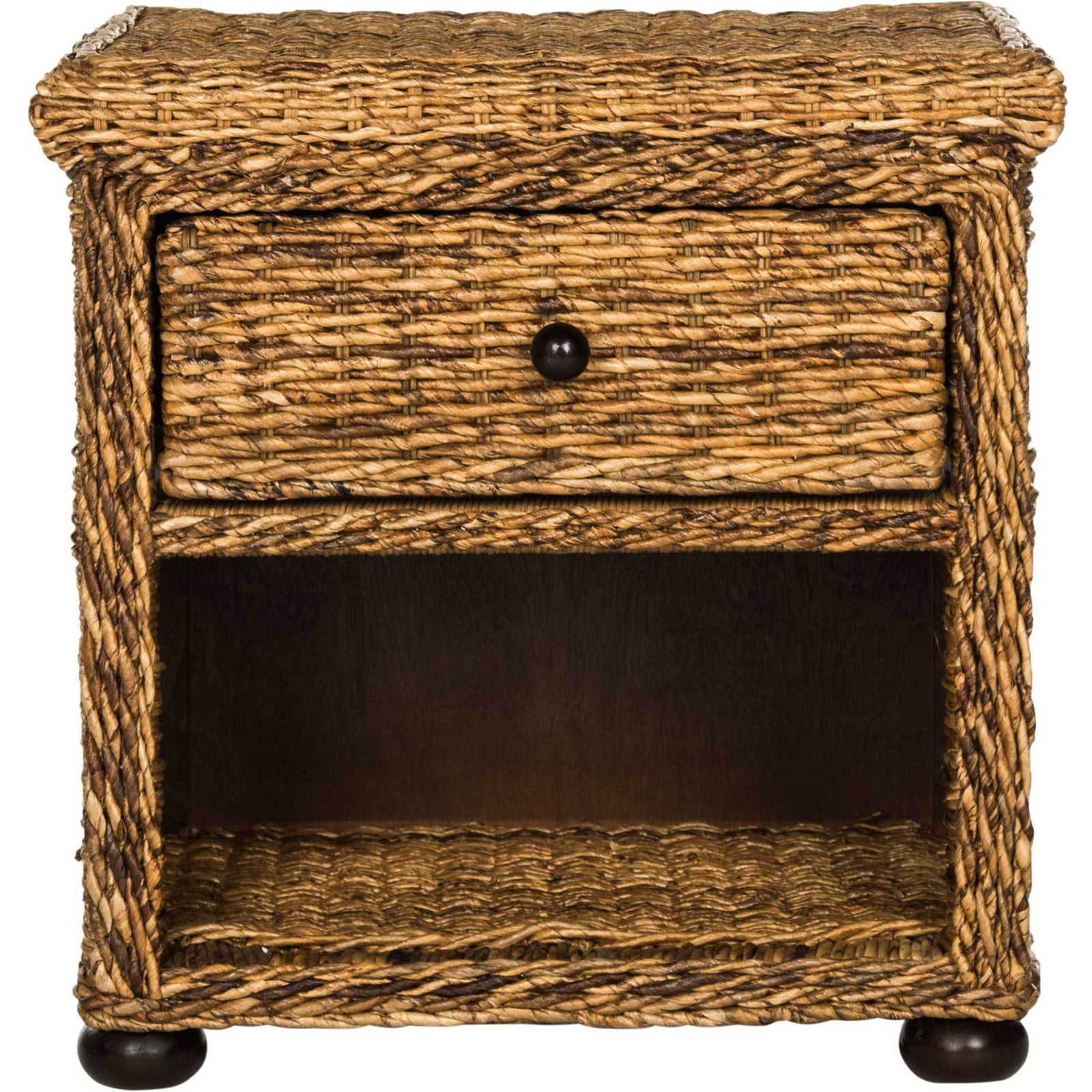
Blue-and-white ticking stripes bring a casual feel to a tan leather-look headboard, especially with a washed linen duvet and a rattan nightstand. A black headboard can take the room in a dressier direction. Try white cotton bedding edged in black so the color of the headboard carries down onto the bed, then add brass sconces for a little warmth.

A faded floral coverlet or an indigo block-print quilt gives a plain leather-look headboard more of a cottage feel. If the headboard has wide upholstered channels, try a small check instead. The small checks give the bedding some pattern and let those wide channels stand out. Two sleeping pillows and a single lumbar leave enough of the headboard showing to see the effect. See our guide to arranging pillows on a bed.




Faux Leather Ottomans and Poufs
A broad faux leather ottoman is a nice match for a linen or bouclé sofa. You get a smooth surface next to all that weave, and a firm, flat top can do double duty as a coffee table. Set a rigid tray at one end so there's still room for your feet. Rattan gives the leather a more casual look, while black lacquer makes it feel dressier.
A ribbed ceramic bowl on a couple of books gives the tray some shape, and a folded striped cotton throw softens the other end. You can lift both off when you need an extra seat. If the ottoman is deeply tufted or soft enough that the tray rocks, give drinks their own side table.
If a full-size ottoman would crowd the room, tuck a round faux leather pouf beside an armchair. Dark olive gives a pale chair a little contrast. Try a blush tray on top and repeat the color with a throw over the arm of the chair.


Leave a comment
Comments will be approved before showing up.


What Is Faux Leather? Pros, Cons & Decorating Ideas
See what faux leather is made of, its pros/cons, how it compares to real leather, its different names and varieties, and how to care for it. Then get ideas for pairing leather-look sofas, chairs, beds, and ottomans with the pieces around them.


Coastal Interior Design Guide: Furniture, Colors, and Decor Ideas
Bring a coastal feeling home with furniture, colors, and decorating ideas you can put into practice. Explore room-by-room furnishing tips, and intro to four major coastal styles like collected beach cottage and relaxed California modern.


Bed and Mattress Size Guide: Dimensions and How to Choose
Compare standard US mattress sizes, from Twin to California King, and learn how much room your complete bed frame really needs. Our illustrated guide covers bedroom clearances, sleep/seated bed height, and tips for delivery considerations.


Polypropylene Rugs Guide: Pros, Cons & Best Use Cases
Polypropylene rugs are budget-friendly, stain-resistant, and easy to maintain — but there's more to consider before buying one. Discover their pros, cons, care tips, and the best rooms to use them in when you shop.


Boho Interior Design Guide: Colors, Furniture & Decor Tips
Learn how to style your home in boho interior design, from warm color palettes and textiles to furniture, lighting, plants, and wall decor. Explore popular bohemian styles and get room-by-room decorating tips for a cozy, personalized space.


What Colors Go With Brown: Top Palettes By Material & Style
Wondering what colors go well with brown? We cover major colors that complement brown, from creamy off-whites to sage green. Our post also touch on best color pairings for brown-colored materials like wood, leather, fabric.


TV Stand Size Guide: Find the Ideal Width, Depth, and Height
Not sure what size your TV stand should be? Read our TV stand size guide to learn practical tips on what width, depth, or height the stand should be based on your TV size, viewing distance, and accessories.


Coffee Table Height & Size Selection Guide
Discover the ideal coffee table height, width, and depth for your living room. Learn about the standard coffee table dimensions, measuring rules for proper spacing from nearby couches and TV stands, and layout tips.