


- Bed & Mattress Size Guide
- Polypropylene Rugs Guide
- TV Stand Sizing Guide
- Coffee Table Height & Size Guide
- Dining Table Height & Seat Height
- Types of Tables Explained
- How Tall Should a Nightstand Be?
- Sofa Dimensions Guide
- Living Room Rug Size Guide
- What Bar Stool Height Do I Need?
- What is Rubberwood?







Bed and Mattress Size Guide: Dimensions and How to Choose
A standard queen mattress measures 60 inches wide by 80 inches long. A king adds 16 inches of width; a full is 6 inches narrower and 5 inches shorter than a queen. Simple enough—until you add a frame, two nightstands, and a dresser you would quite like to open.
Choose your mattress for the sleeping space you need, then plan the room around the complete bed. The frame’s outside dimensions matter here: a generous headboard or deep footboard takes up space beyond the mattress. Leave yourself room to stretch out at night and get dressed comfortably in the morning.
Standard US mattress sizes
Dimensions are shown as width × length, in both inches and feet-and-inches. These are common nominal US mattress sizes; individual products may vary slightly, so check the exact dimensions before ordering.
| Mattress size | Width × Length (Inches) | Width × Length (Feet & Inches) | Main Consideration |
|---|---|---|---|
| Twin / Single | 38" × 75" | 3'2" × 6'3" | A compact option for one sleeper |
| Twin XL | 38" × 80" | 3'2" × 6'8" | Twin width with 5 extra inches of length |
| Full / Double | 54" × 75" | 4'6" × 6'3" | More width for one sleeper; limited space for two |
| Queen | 60" × 80" | 5'0" × 6'8" | A balance of shared sleeping space and room footprint |
| King | 76" × 80" | 6'4" × 6'8" | More width for two sleepers, with the same length as a queen |
| California King | 72" × 84" | 6'0" × 7'0" | Extra length in exchange for some king-size width |

Full and double mean the same size in US bedding. Despite the name, a double is not twice as wide as a twin. Twin and single are also commonly used interchangeably.
Once you have a size in mind, look up the exact mattress measurements. Some manufacturers list twins at 74 or 74.5 inches long and full mattresses at 53 inches wide, as Sealy’s model-specific dimensions show. Pay particular attention to these differences if you are keeping your existing frame.
Specialty sizes, including short queen and oversized king, need frames and bedding sized to their actual measurements too.
Which mattress size should you choose?
Start with what you wish were different about your current bed. More room to turn over calls for width; feet hanging off the end call for length. Moving from queen to king solves the first problem, but adds no legroom.
For two adults sharing a bed, width determines how much space each person has side by side, while both sleepers have the full mattress length. The widths below assume an equal split:
| Mattress Size | Width Per Person | Mattress Length |
|---|---|---|
| Full | 27" (2'3") | 75" (6'3") |
| Queen | 30" (2'6") | 80" (6'8") |
| King | 38" (3'2") | 80" (6'8") |
| California King | 36" (3'0") | 84" (7'0") |
Try the size together if you can, in your usual sleeping positions. The arithmetic is tidy; two people and a dog rarely divide a bed quite so neatly.
Twin or twin XL: do you need more length?
A twin leaves more floor space for a desk, play area, or other furniture in a small bedroom. For a taller sleeper, the twin XL is worth a look: it adds 5 inches of length without becoming any wider. Remember that your pillow takes up some of that length, too. Choose the XL if you need the extra stretch, and buy the corresponding frame and fitted sheets.
Full or queen: extra width, extra length, or both?
A full is a useful middle ground for one person who wants more room than a twin offers. Two adults can share it, but at 27 inches of width each, it is a close fit. That might be a reasonable compromise for occasional guests; for a bed shared every night, start by seeing whether a queen will work.
A queen adds 6 inches of width and 5 inches of length, so a solo sleeper gets more room in both directions as well. Compare the complete dimensions of full-size beds and queen-size beds before deciding. In a guest room that doubles as an office, preserving room for the desk may win; in a bedroom used by two adults every night, the extra sleeping space may matter more.
Queen or king: is more sleeping width worth the floor space?
A king gives two sleepers 8 more inches each than a queen, assuming an equal split. If one of you regularly ends up at the edge, that is a substantial reason to go larger.
Give a king-size bed a place in the floor plan before committing to it. If it leaves you squeezing past the dresser or sacrificing a nightstand you use every day, a queen deserves another look. For one person, a queen may already offer plenty of room to spread out while leaving space for a reading chair or a larger bedside table.
King or California king: width versus length
A California king trades 4 inches of standard-king width for 4 inches of extra length. Choose it when legroom is the priority. If you want more space between two sleepers, the standard king has the advantage. Each needs its own correctly sized frame and fitted sheets.
What about a split king? A conventional split king uses two twin XL mattresses side by side, creating a nominal 76 × 80-inch sleeping area. Two ordinary twins have the shorter 75-inch nominal length. For independent adjustment, confirm that the mattresses, adjustable bases, and surrounding bed frame are all compatible. Split California king is a different configuration, not two twin XLs.
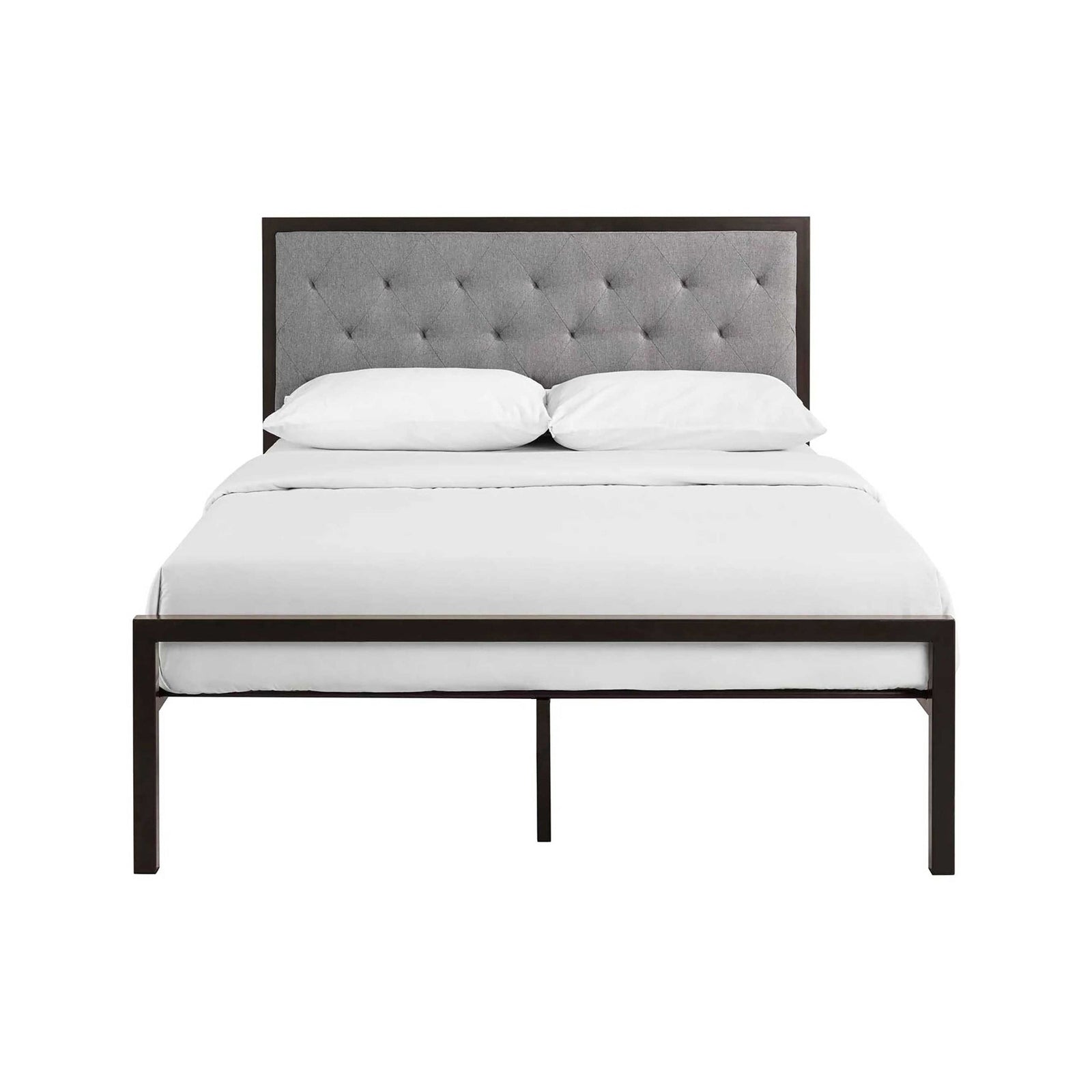

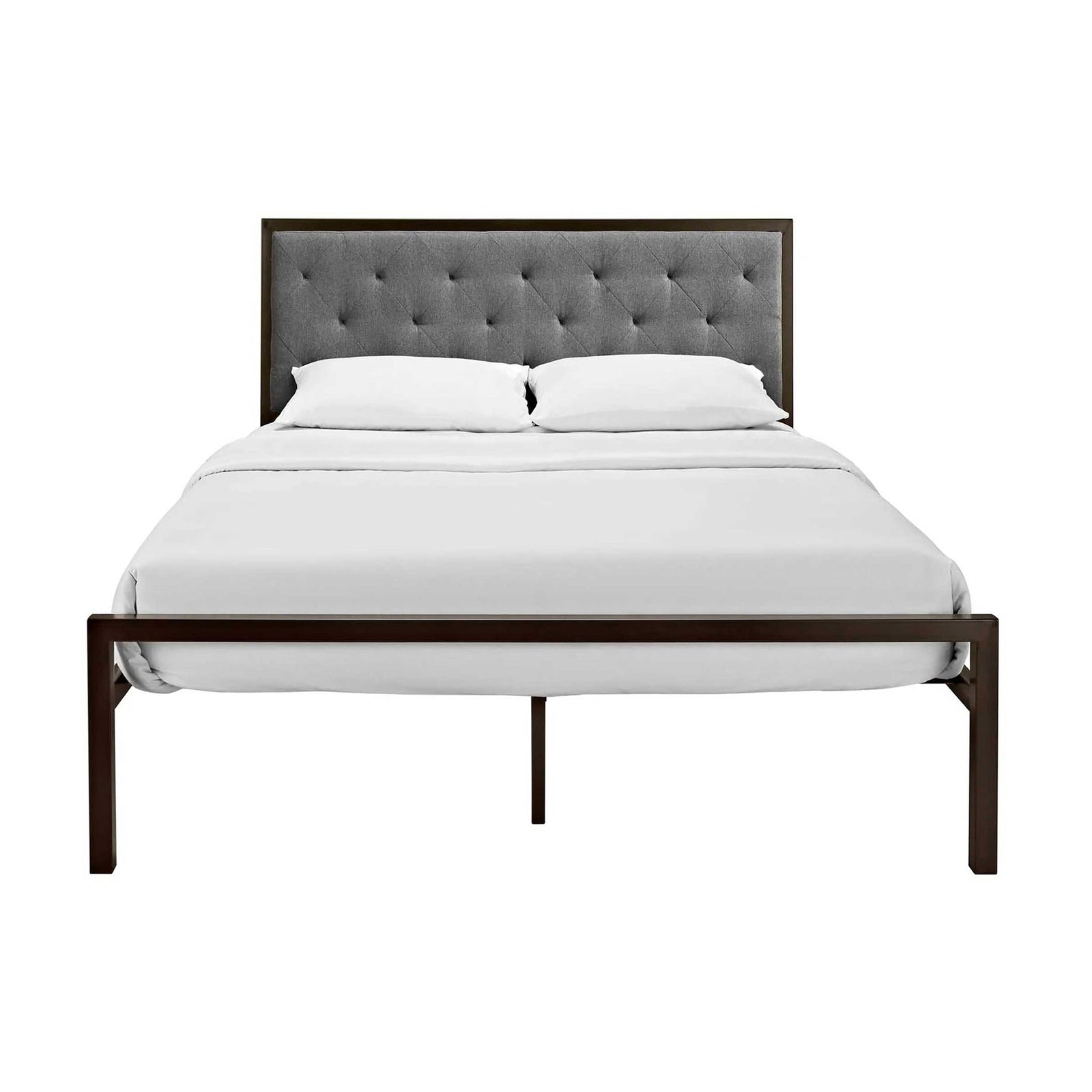

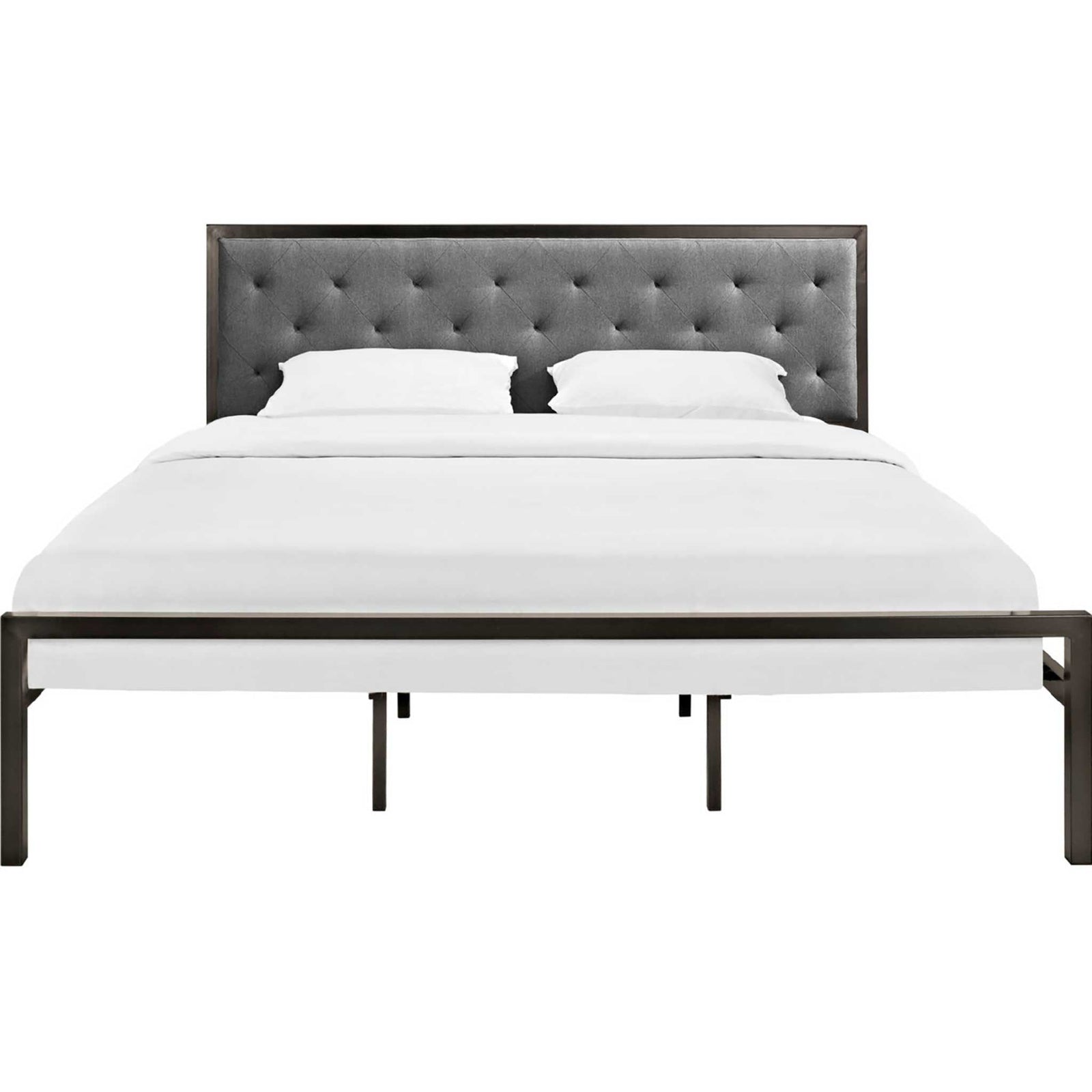

Will the complete bed fit your room?
A sculptural headboard or generous upholstered frame may be the reason you love a bed. Give it room in the plan. The headboard, rails, legs, and footboard all contribute to the footprint, which can vary even when the mattress size stays the same.

Read overall and inner-frame dimensions separately
Use the bed’s overall width and depth in your floor plan. Depth on a bed listing usually runs from the headboard end to the footboard end, the direction called length in a mattress chart. The inner-frame measurements describe the mattress opening.
If you are keeping your current frame, confirm its intended mattress size and measure the opening before ordering. A queen is wider and longer than a full, so it won’t sit properly in a full frame. The support requirements below matter as well.
Two queen frames at Froy show the distinction:
| Queen bed | Listed inner frame: width × depth | Listed overall footprint: width × depth |
|---|---|---|
| Zander Spindle Bed Walnut | 61.1 × 80.7 inches | 64 × 85 inches |
| Aster Wood Platform Bed Walnut | 62 × 81 inches | 67.5 × 90 inches |
Both are queen beds, but Aster is 3.5 inches wider and 5 inches longer overall. In a spacious room, you may happily give those inches to a design you love. Beside a dresser in a smaller bedroom, you may prefer to keep them for walking space. Even two wood frames in the same mattress size deserve separate measurements.

Allow for movement and furniture that opens
Take the room measurements, noting baseboards, radiators, columns, and anything else that projects from the walls. Mark door swings and closet access, then tape out the complete bed footprint on the floor. Include the other furniture you plan to keep.
Use roughly 24–36 inches of clear walking space along the sides you use and at the foot as a planning guide, with more room wherever you need it. Now walk through the layout. Follow the route from the door to the closet, and stand where you would make the bed. Remember that a duvet trailing over the edge or a bench at the foot of the bed takes up space too.
Plan the bed and nightstands together. Add the bed’s overall width, both nightstand widths, and the gaps between them, then check the arrangement against the usable wall. You should be able to get past the tables without turning sideways.
Consider how the group will look, too. A broad headboard with very small nightstands can feel out of balance. Before settling for the narrowest tables available, try a bed with a narrower headboard or a different arrangement. And give each tabletop enough space for what you actually keep there: a lamp and a book need more room than a phone alone.
The dresser needs a little more room than its closed dimensions suggest. Allow space for an open drawer and for you to stand in front of it. Check wardrobe doors and bed-storage drawers the same way. A lift-up storage bed needs space to raise the mechanism and reach inside.
A queen in a 10 × 12-foot room: a worked example
Here is how the measurements play out. Take a 10 × 12-foot room, or 120 × 144 inches. Center the Zander queen across the width, with its head end against a short wall. Put a hypothetical 20-inch-deep dresser against the opposite wall.
| Measurement | Calculation | Space remaining |
|---|---|---|
| Each side of the bed, where no other furniture projects | (120 − 64) ÷ 2 | 28 inches |
| Between the footboard and the closed dresser | 144 − 85 − 20 | 39 inches |
Now shorten the room to 10 × 10 feet. The same arrangement leaves only 15 inches between the footboard and closed dresser: 120 − 85 − 20. The bed fits, but getting around its foot becomes a squeeze. Open a drawer and there is even less space.
Changing the frame makes a difference without changing mattress size. In the original 10 × 12-foot room, the 90-inch-long Aster queen leaves 34 inches in front of the closed dresser, compared with Zander’s 39 inches. Moving up to the Zander king, at 80 inches wide overall, reduces the side gaps from 28 to 20 inches.
These calculations assume the bed and dresser sit against their walls, with no door swings or other obstructions in the gaps. Add those details to your own plan.
Before giving up the mattress size you want, try moving the dresser or choosing a frame with a smaller footprint. Narrower nightstands can help along the headboard wall, provided they still work for you. Sometimes the furniture arrangement needs to change; sometimes the bed really is too big. A plan with your actual pieces will tell you far more than a general minimum-room-size recommendation.
Check mattress support and bed height
Once you've settled on a frame, make sure it provides the right support for your mattress. Then consider how high the mattress will sit. That measurement affects how easily you can get into bed, how much of the headboard remains visible, and whether your nightstand feels within reach.
Does the frame provide the support your mattress requires?
Read the mattress and frame specifications together, including foundation requirements, slat spacing, center support, and weight limits. Platform beds often do away with a separate box spring, but the slats or platform still have to provide the support your mattress requires.
The Aveline 10-inch mattress sold at Froy, for example, calls for slats under 3 inches apart when using a slatted base. Measure the gaps between the slats as well as the mattress opening, and compare them with your chosen mattress’s instructions.
Ask the retailer about any missing support details before buying. With an adjustable base, also confirm that the mattress is compatible and the surrounding frame allows the base to move as intended.
How high will the top of the mattress be?
To estimate your bed's height, measure from the floor to the surface that supports your mattress, such as the top of the slats or platform. Then add the mattress thickness. If your setup also uses a box spring, foundation, or mattress topper, include the thickness of those layers too.
For example, imagine a platform bed where the mattress support sits 12 inches above the floor. Add a 10-inch mattress, and the top will be approximately 22 inches from the floor. An 8-inch mattress would bring it down to about 20 inches. These measurements are taken before anyone sits on the bed, since mattresses compress under weight.

Don't confuse this measurement with a bed frame's listed overall height, which often includes the headboard. If the height of the mattress support isn't specified, ask the retailer before ordering.
Mattress thickness also affects how your bed looks. A thicker mattress can hide more of the headboard or sit higher above the side rails. As you compare queen-size mattresses, picture how the mattress, pillows, and headboard will look together.
Finally, try sitting on a bed at a similar height. Your feet should rest comfortably on the floor, and getting up should feel natural. Consider your nightstand, too: a tabletop near the top of the mattress is a useful starting point, but what really matters is how comfortably you can reach it from bed. Our guide to nightstand height can help.
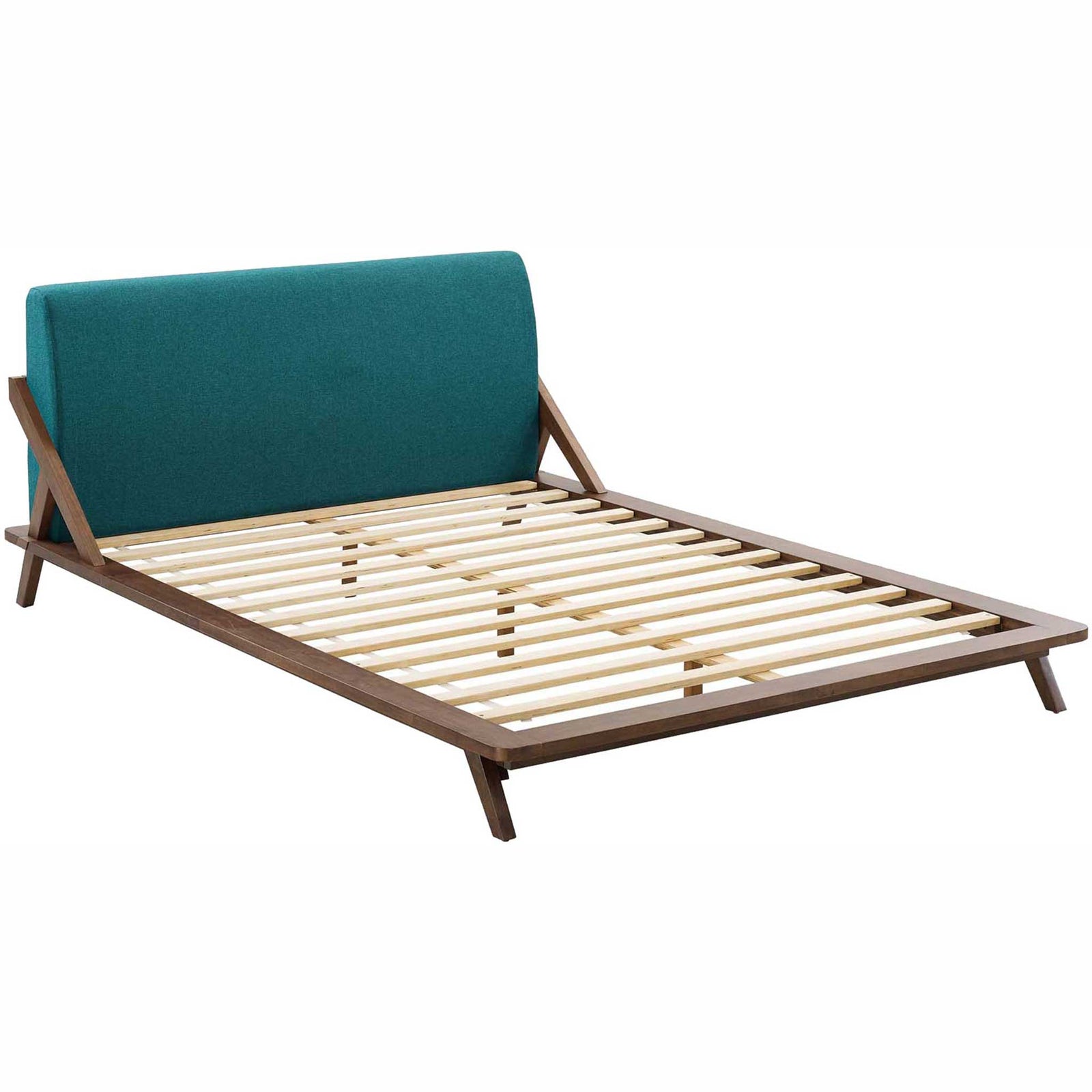


Before ordering, take the tape measure out of the bedroom. You need to know how the bed will get there, using the shipping-package dimensions or the largest assembled components for your selected size.
The Zander queen lists two packages measuring 11 × 77 × 5 inches and 14 × 88 × 6 inches. It arrives in pieces, but an 88-inch-long carton still needs room to turn. Check the mattress package separately; a boxed mattress travels in a different shape from the one it takes on your bed.
Follow the full route from the entrance to the bedroom:
- Measure clear doorway widths and heights, allowing for doors, handles, and trim.
- Check hallway turns and the space opposite each doorway.
- Measure stair widths, landing dimensions, and overhead clearance.
- For an elevator, measure its opening and interior, including projections such as handrails.
- Account for fixed obstacles and the space needed to carry and assemble the pieces.
A doorway may be wide enough while the turn immediately beyond it is too tight. Share any awkward spots and the package dimensions with the retailer before ordering. Check the mattress instructions before bending or folding it, and confirm whether delivery includes any door removal or assembly you will need.
Before you buy
Before placing the order, make sure you can fill in each of these details for your chosen mattress and frame:
- Sleeping space: the exact mattress width and length, with enough room for the people using it.
- Frame fit: the intended mattress size, inner opening, and overall width and depth.
- Room fit: clear routes, nightstand placement, and room to open drawers and doors.
- Support: the mattress’s foundation requirements and the frame’s support specifications.
- Bed height: the height from the floor to the top of the mattress, checked against how you get into bed and reach your nightstand.
- Delivery: package dimensions, turning space, and the service included with your order.
Give yourself the sleeping space you need, but keep the rest of the room in the decision. The right bed is one you can also live around: a dresser that opens, a lamp within reach, and a clear path to the closet.
Leave a comment
Comments will be approved before showing up.


Bed and Mattress Size Guide: Dimensions and How to Choose
Compare standard US mattress sizes, from Twin to California King, and learn how much room your complete bed frame really needs. Our illustrated guide covers bedroom clearances, finished bed height, and the measurements to check before ordering.


Polypropylene Rugs Guide: Pros, Cons & Best Use Cases
Polypropylene rugs are budget-friendly, stain-resistant, and easy to maintain — but there's more to consider before buying one. Discover their pros, cons, care tips, and the best rooms to use them in when you shop.


Boho Interior Design Guide: Colors, Furniture & Decor Tips
Learn how to style your home in boho interior design, from warm color palettes and textiles to furniture, lighting, plants, and wall decor. Explore popular bohemian styles and get room-by-room decorating tips for a cozy, personalized space.


What Colors Go With Brown: Top Palettes By Material & Style
Wondering what colors go well with brown? We cover major colors that complement brown, from creamy off-whites to sage green. Our post also touch on best color pairings for brown-colored materials like wood, leather, fabric.


TV Stand Size Guide: Find the Ideal Width, Depth, and Height
Not sure what size your TV stand should be? Read our TV stand size guide to learn practical tips on what width, depth, or height the stand should be based on your TV size, viewing distance, and accessories.


Coffee Table Height & Size Selection Guide
Discover the ideal coffee table height, width, and depth for your living room or lounge area. Learn about the standard coffee table dimensions, measuring rules relative to couches and other nearby furniture, and proper fit based on spacing and room layout.


Mid-century Modern Interior Design 101: Decor Ideas & Design Tips
Discover the essentials of mid-century modern interior design. We cover its defining features, iconic furniture pieces, suitable art and decor, color palettes, and much more. Get simple decorating tips and architectural guidelines to get the perfect MCM look.


Dining Table Height, Bar Height, and Counter Height Guide
Identify the ideal height ranges for dining tables, bar tables, and counter tables, along with the proper seat heights for the chairs and stools to pair with them. Learn to choose a slightly lower or taller table based on use cases, family members, armrests, and more.