


- Bed & Mattress Size Guide
- Polypropylene Rugs Guide
- TV Stand Sizing Guide
- Coffee Table Height & Size Guide
- Dining Table Height & Seat Height
- Types of Tables Explained
- How Tall Should a Nightstand Be?
- Sofa Dimensions Guide
- Living Room Rug Size Guide
- What Bar Stool Height Do I Need?
- What is Rubberwood?






TV Stand Size Guide: Find the Ideal Width, Depth, and Height
Choosing the right TV stand size is actually really simple when you know what width, depth, and height to look for. As a simple rule of thumb, the TV stand should always be 3 to 8 inches wider than your TV on each side. The larger the TV, the more space should be on each side. When in doubt, size up as most professional interior designers prefer more space on each side to less. This gives you extra space for speakers, top space for remotes and other loose items, extra clearance to prevent accidentally bumping into your TV, and avoids your entertainment center looking cramped.
| TV Screen Size | Recommended Stand Width | Ideal Viewing Distance |
|---|---|---|
| 32" | 30"-44" | 3'-5' |
| 43" | 40"-54" | 4.6'-6' |
| 50" | 50"-64" | 5'-7' |
| 55" | 55"-68" | 5'6"-7'6" |
| 60" | 60"-74" | 6'-8' |
| 65" | 65"-80" | 6'6"-8'6' |
| 70" | 70"-86" | 7'-9'6" |
| 75" | 75"-92" | 7'6"-10' |
| 80" | 80"-98" | 8'-10'6" |
Because choosing your TV size is partially based on viewing distance, there is also a relationship between the TV stand width and the viewing distance to your TV. If you want a more cinematic experience, choose a shorter viewing distance to have your TV take 40 degrees of your seated field-of-view (FOV). If you want a more normal, mixed-use experience, choose a longer viewing distance to have your TV take a 30 degrees of your seated FOV.

How to Measure Your TV Correctly
You may have seen "65-inch" or "55-inch" sticker on a TV, but don't rely on it when choosing your TV stand. That number refers to the TV's diagonal screen length, not its actual horizontal width. To get the right size, measure the TV straight across the frame horizontally, or simply check its specification sheet. For the purpose of TV stand sizing, we need the TV's horizontal frame width then add 4 to 8 inches on each side for the stand width. Typically, a TV's frame width is approximately 87% of the diagonal screen length.

| TV Screen Size | Typical TV Frame Width |
|---|---|
| 32" | 28" |
| 43" | 38" |
| 50" | 44" |
| 55" | 49" |
| 60" | 53" |
| 65" | 57" |
| 70" | 62" |
| 75" | 66" |
| 80" | 70" |
Standard TV Stand Dimensions
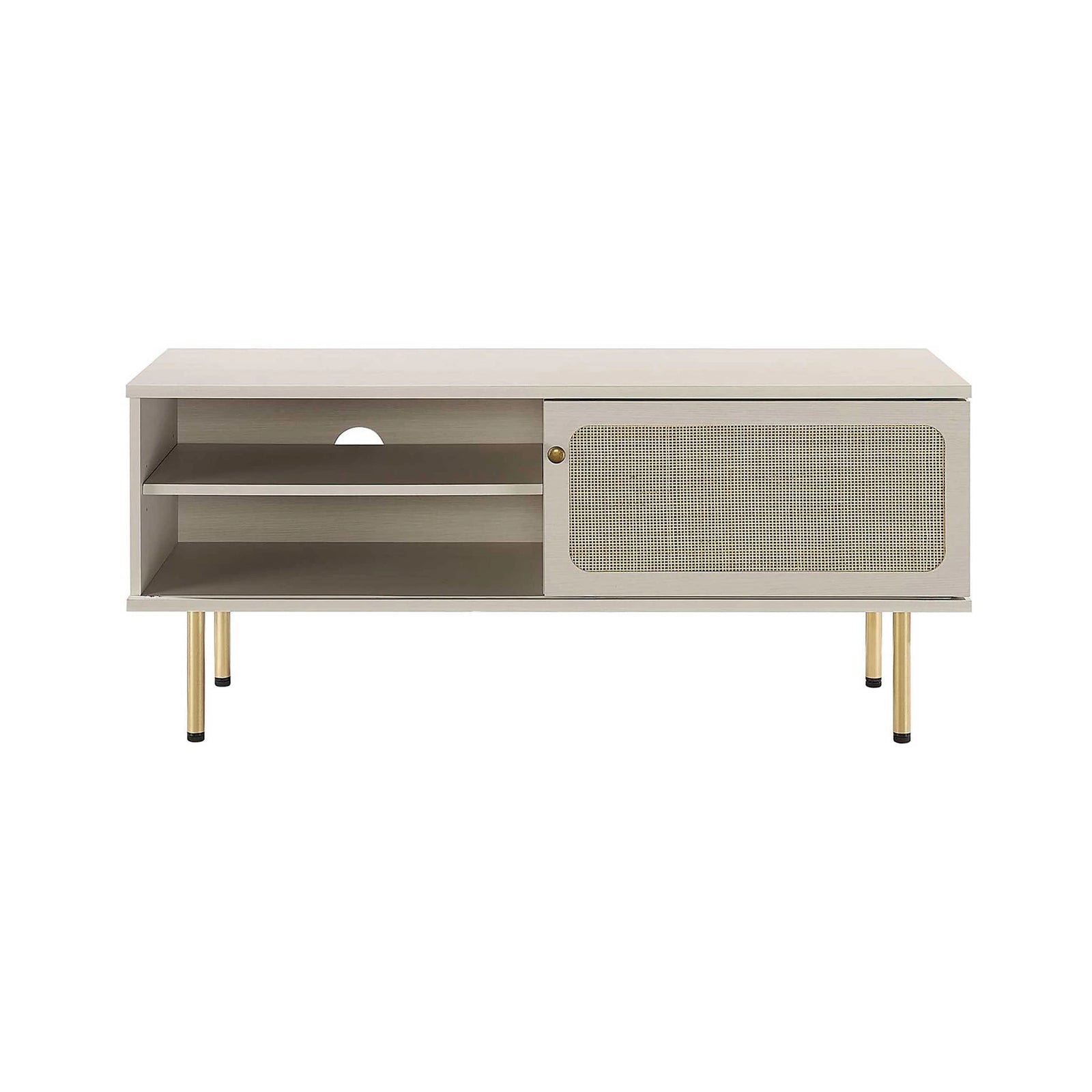
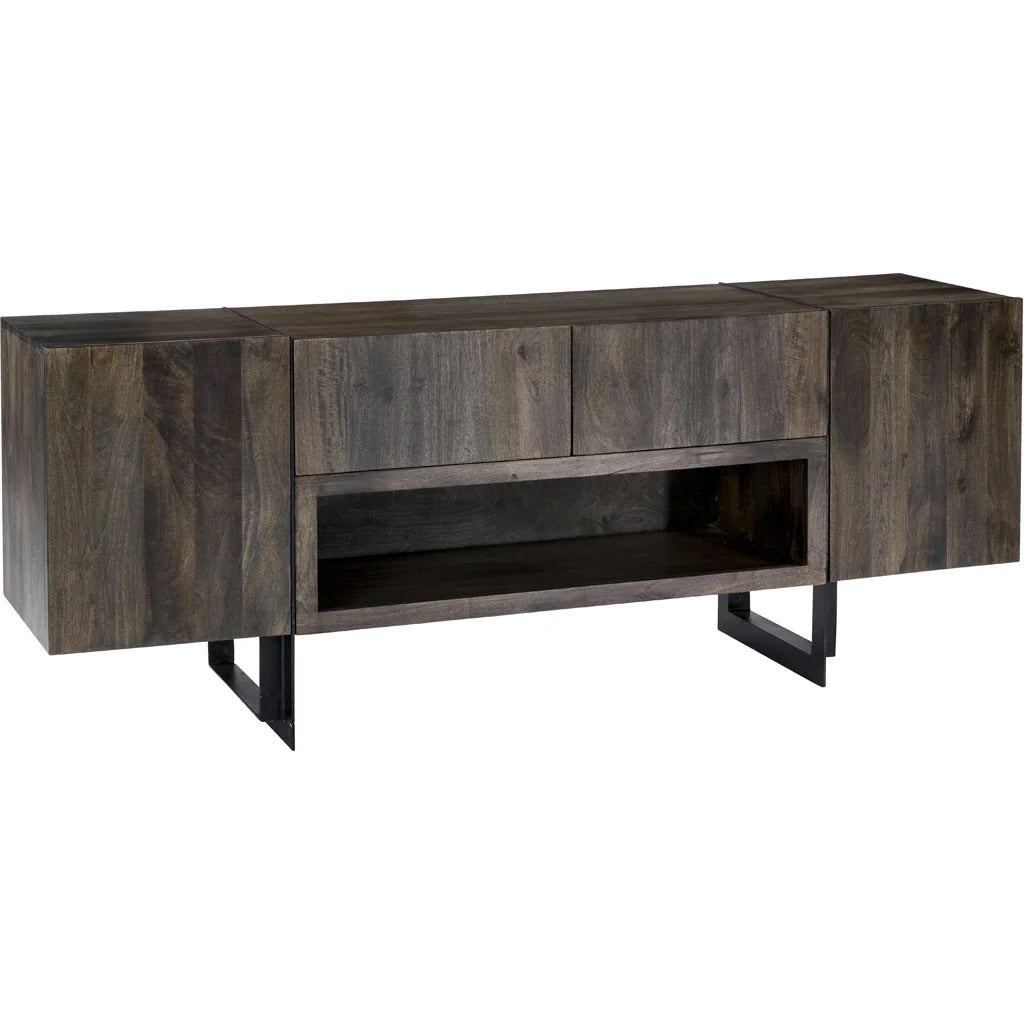
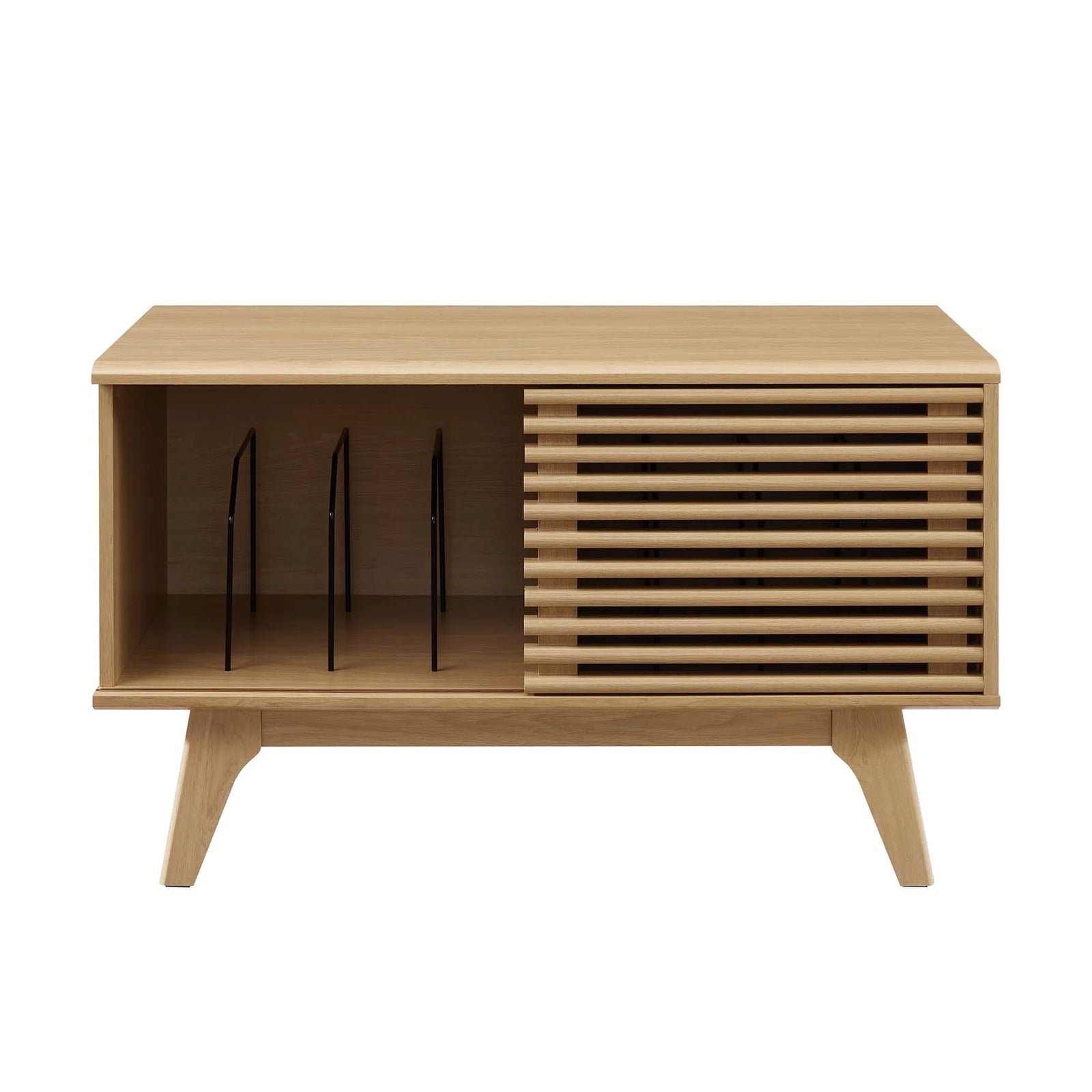
Typically, standard sized stands are 48 to 60 inches wide, 14 to 16 inches deep, and 18 to 26 inches high. Because width represent the single most significant dimension for TV stands, a small TV stand is often less than 48 inches wide, while a large TV stand is often more than 60 inches wide. Of course, having a depth or height that are both greater than the average can make a TV stand considered small or large as well.
Below are the common TV stand sizes showing its width, height, and depth. Keep in mind to check your TV's actual width before choosing a stand, since they can have slightly different dimensions.
| Category | Typical Width | Typical Height | Typical Depth |
|---|---|---|---|
| Small | Under 48" | 15"-22" | 12"-16" |
| Medium | 48"-60" | 16"-26" | 14"-18" |
| Large | Over 60" | 18"-30" | 16"-20" |



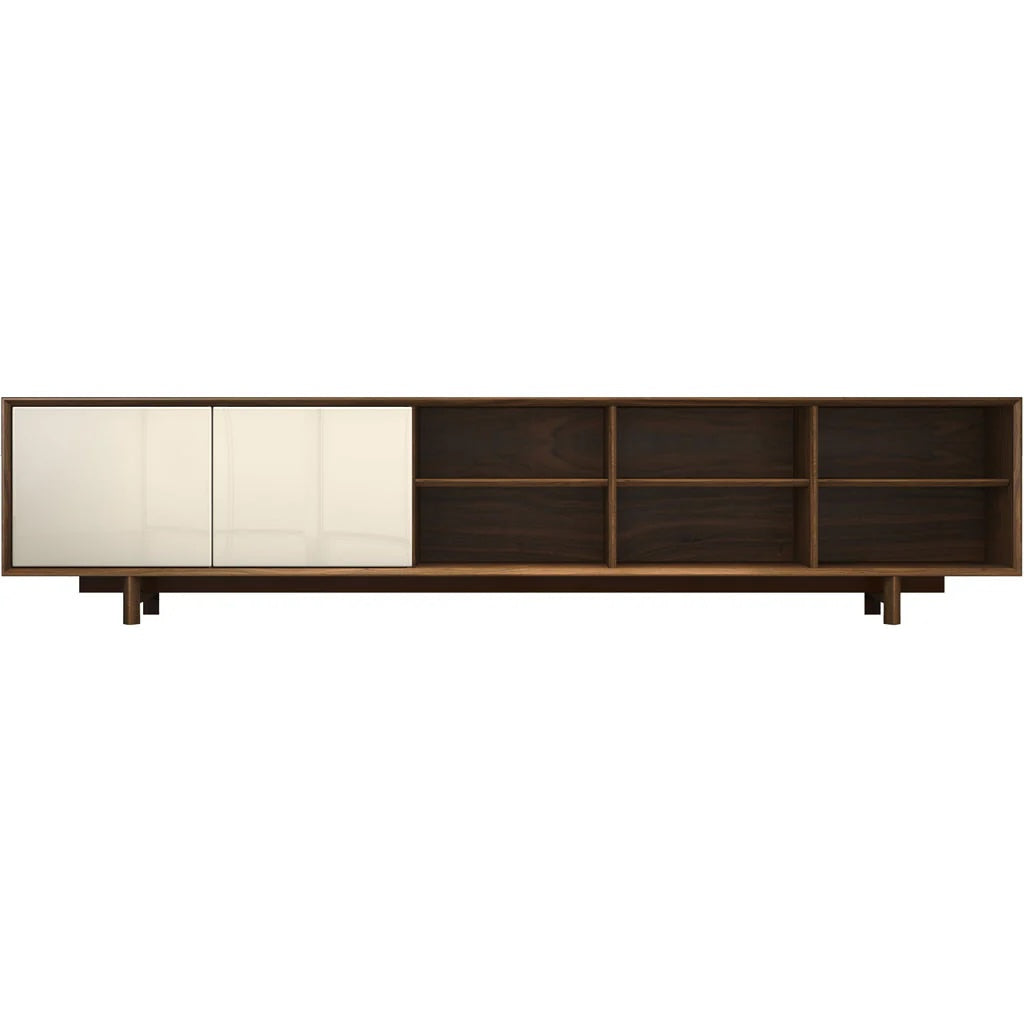

TV Stand Sizing for Common TV Sizes
Although there are many different TV sizes, the most common TVs are between 50-inch to 70-inch. Below are some specific guidelines for these top-selling TV sizes.
Best TV Stand Size for a 70-Inch TV
A 70-inch TV measures about 62 inches in actual edge-to-edge width. For the best TV stand size, choose a stand between 70 to 86 inches wide since you want enough room on either side to look less crowded relative to such a large TV. Given its length, consider a media console with drawers for extra concealed storage and treat it as a living room storage piece.
Best TV Stand Size for a 65-Inch TV
Because a 65-inch TV usually has a 57-inch frame width, you should find a stand that's 65 to 80 inches wide. A 65-inch stand is considered the most common size these days, and so a 4-inch per side rule can begin to apply here although most designers would still prefer at least 6-inches on each side.
Best TV Stand Size for a 60-Inch TV
A 60-inch TV usually has a horizontal frame width of 53 inches, look for a stand between 60 and 74 inches wide. A 60-inch TV is considered medium-large, so you still need more space on either side of the TV to keep the entertainment setup feeling crammed.
Best TV Stand Size for a 55-Inch TV
A 55-inch TV comes at around 49 inches in width, so place it on a 55 to 68-inch wide stand. This is usually the second most common TV size, so you'll easily find the most variety of designs and features when shopping for a stand.
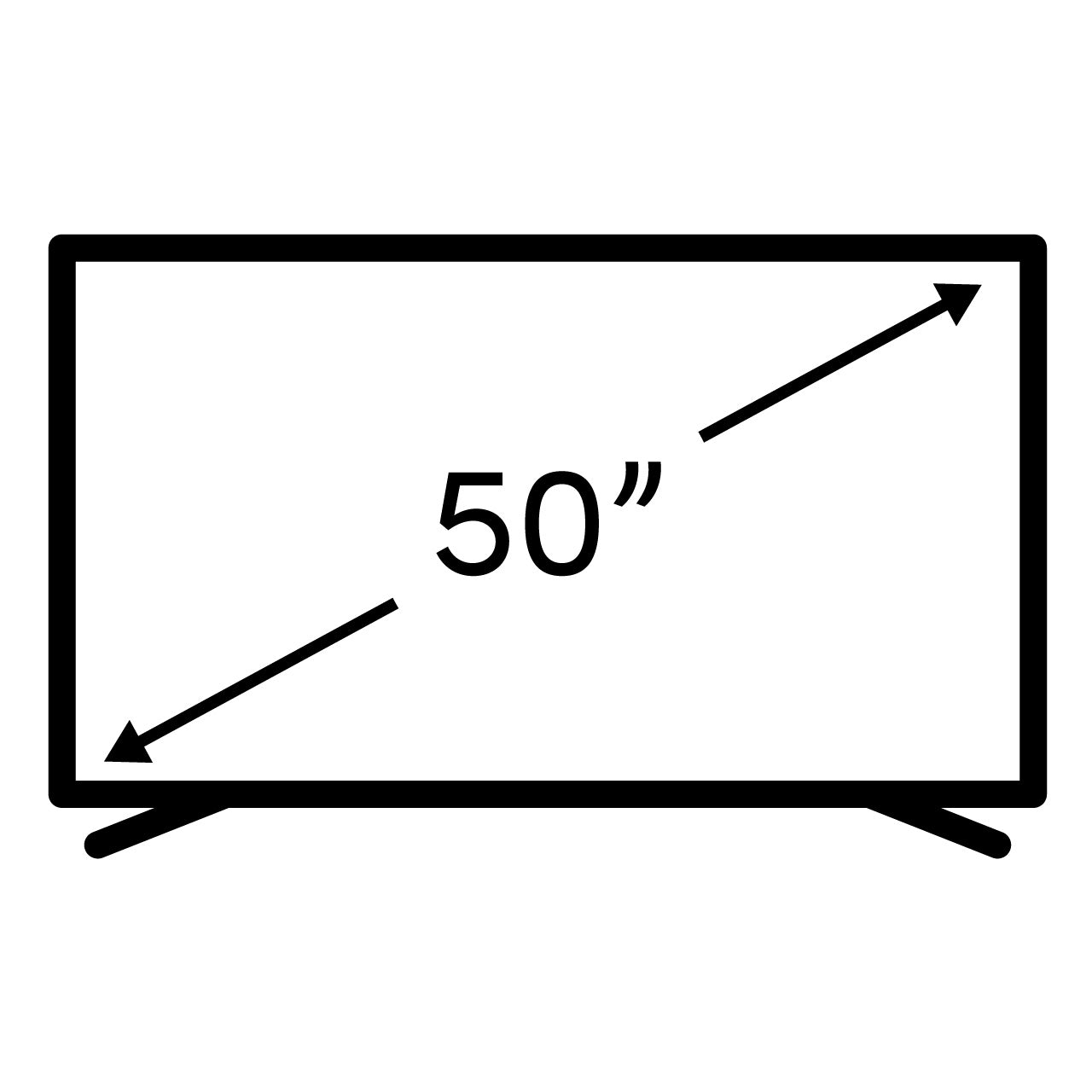
Best TV Stand Size for a 50-Inch TV
Don't let a small space keep you from having a well-styled entertainment area. Because a 50-inch TV usually measures around 44 inches wide, try to look for a stand between 50 to 64 inches wide. This size TV is also popular in the bedroom, where you'll need a taller stand since beds are taller than couches.




TV Stand Height Guide
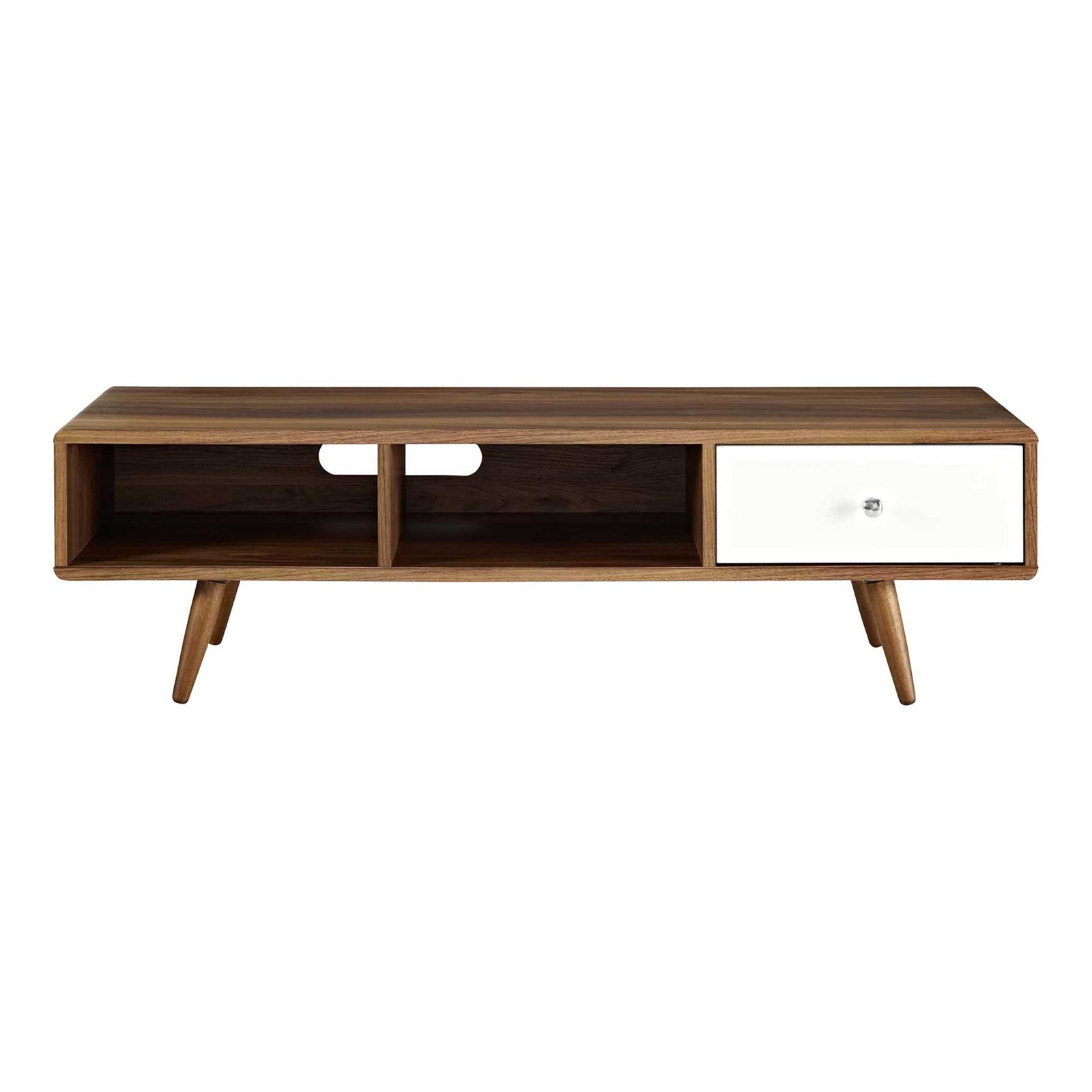
A lot of TV stand heights fall into three levels: Low (under 18"), Standard (18" to 26"), and Tall (over 26"). Your goal is to keep the center of the screen at eye level when you're seated. Avoid choosing a high stand when your TV is at close distance, since you'll be forced to look up to watch your screen.
So here's what you need to do. Measure from the floor to your eye level and then subtract the height of your TV to get an estimated target for the stand itself. For example, if your eye level is about 42 inches from the floor, and your TV measures 24 inches tall, you will get a stand height of about 18 inches. In that case, a Standard ranging from 18 to 26 inches would be the safer pick over a Tall one.


Should I Get a Low TV Stand?
If you're going for a minimalist look or your sofa sits low to the ground, then yes, a low TV stand is the way to go. Low TV stands are usually under 18 inches tall. These offer less vertical space for shelves or cabinets, but it makes your living room feel calmer and intentional.
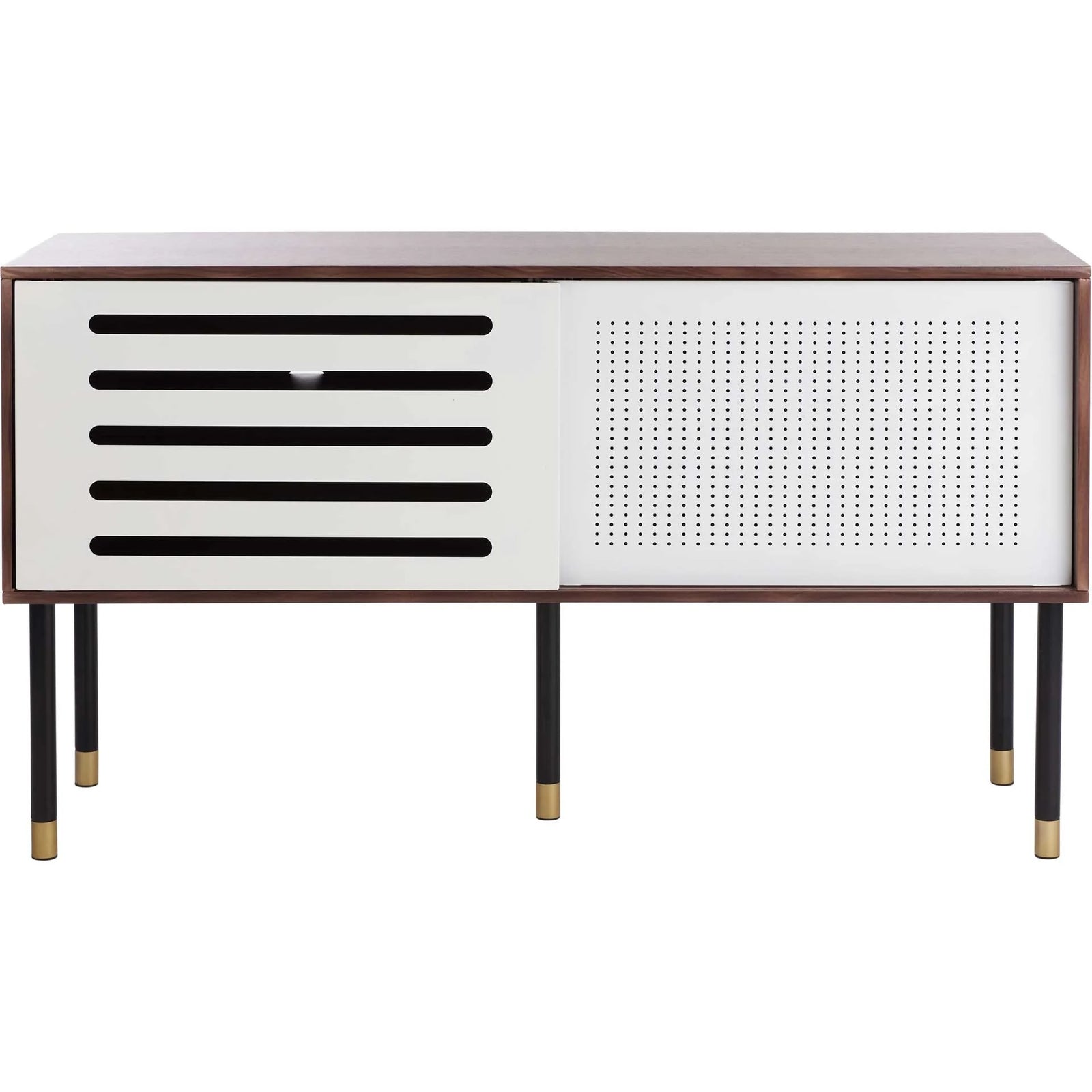
Is a Standard TV Stand the Right Fit for My Space?
For most people, the honest answer is yes. Standard TV stands range between 18 to 24 inches in height. These stands gives you enough room to conceal your gaming console, cable box, and speakers, and keeps the screen close to your eye level so that you won't need to look too far up and down. So if you're looking for the safest option without overthinking, a standard TV stand is the answer.
When Does a Tall TV Stand Make Sense?
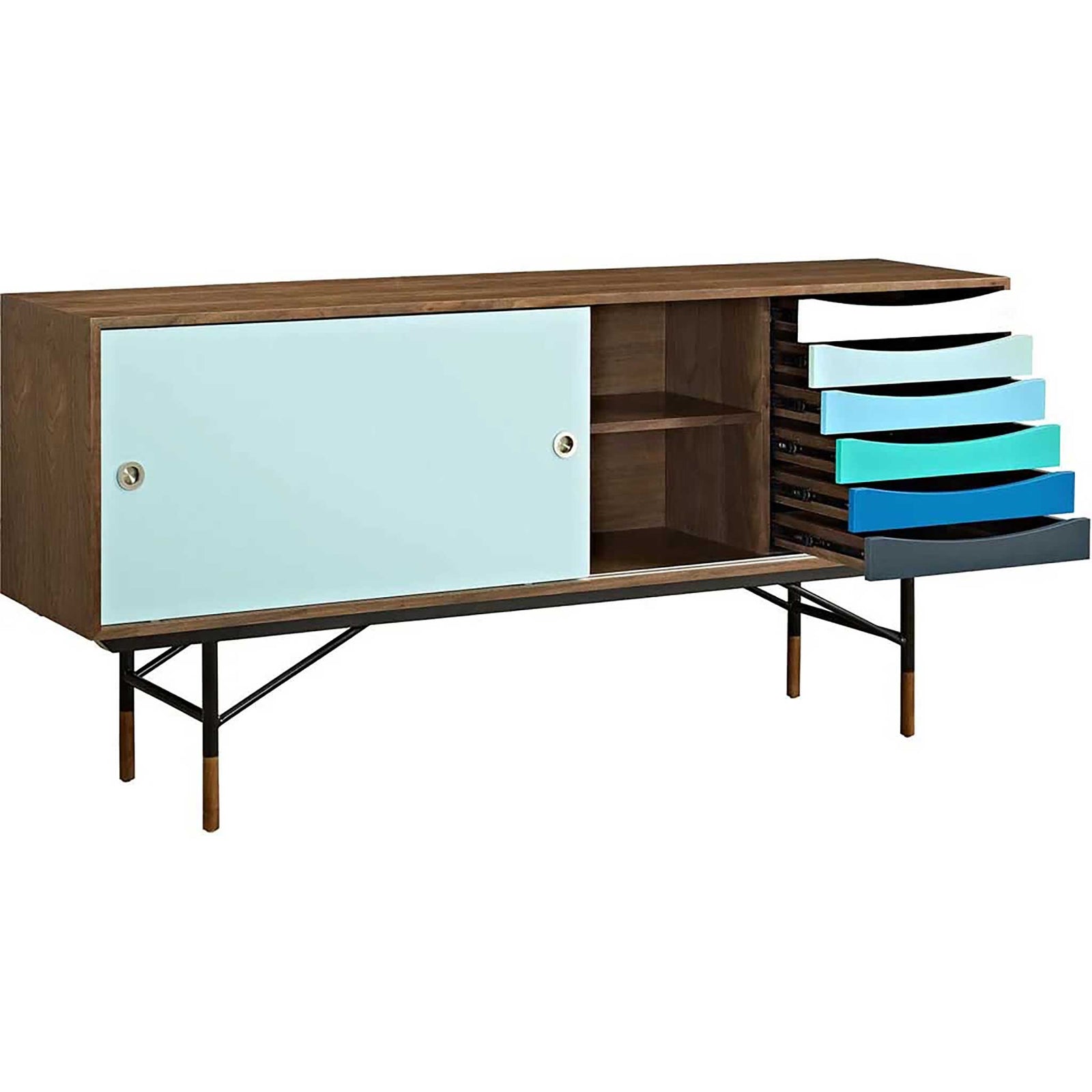
If you're seating is somehow elevated, or you want a stand that doubles as a display piece or room divider, then a tall TV stand is for you. They work best if you have elevated seating or when you view the TV from a distance. It can also offer the most vertical storage, which makes them a good fit if you need extra space for equipment, books, or decorations.
TV Stand Depth Based On Accessories
Let's talk about depth, since it's the dimension that people often overlook. Most TV stands land between 14 and 16 inches deep, though this can vary depending on the retailer. Go too shallow, and you'll end up with your soundbar or console hanging off the edge. Go too deep, and suddenly your stand is eating up your space, leaving you with little area to walk by.
To make it easier, here's a quick sheet to know how much TV stand depth you need based on your accessories.
| Accessory | Additional Depth/Clearance Needed | Minimum TV Stand Depth Needed |
|---|---|---|
| Soundbar | 3"-6" | 14"-16" |
| Gaming console | 12"-15" | 16"-20" |
| AV receiver | 15"-18" | 18"-20" |
| Cable box | 4"-12" | 14"-18" |
| Streaming device | 3"-6" | 14"-16" |
What TV Stand Depth Do You Need for a Soundbar?
The good news is, a soundbar only needs about 3 to 6 inches of TV stand depth, for a minimum of 14" TV stand depth. You can go with a standard-sized TV stand, since pretty much any soundbar can fit without issue. The real thing to watch for is its width and height. You'll want a TV stand that is wide enough to fit the soundbar to avoid blocking its sensor, plus enough vertical clearance to prevent the sound from muffling if it's placed below a low-mounted screen.
What TV Stand Depth Do You Need for a Gaming Console?
If you plan to have a gaming console, your TV stand will need at least 10 to 12 inches of extra depth, for a minimum of 16" of TV stand depth. That extra space is necessary for airflow and ventilation, as well as all the cables extending from the console. Look for a TV stand with shelves with cable holes for a better storage space for your gaming console. A Nintendo Switch require less extra depth, while an PlayStation or XBOX will require more. If your stand does not feature a shelf and you must place your console in front of or behind your TV, make sure to position your console vertically to minimize space.
What TV Stand Depth Do You Need for an AV Receiver?
An AV receiver typically needs about 15 to 18 inches of depth, for a overall TV stand depth of at least 18". Just like consoles, they run warm and require breathing room to avoid overheating. Open shelving or cabinets with louvered doors isn't optional here, it's an essential.
What TV Stand Depth Do You Need for a Cable or Streaming Device?
Cable boxes need a bit more room, around 8 to 10 inches deep depending on its size for an overall stand depth of at least 14" for a streaming device and 16" for a cable box. Streaming devices typically needs at least 3 to 6 inches. For both devices, it's best to choose a wider TV stand depth of 16 to 18 inches to give each device enough space.

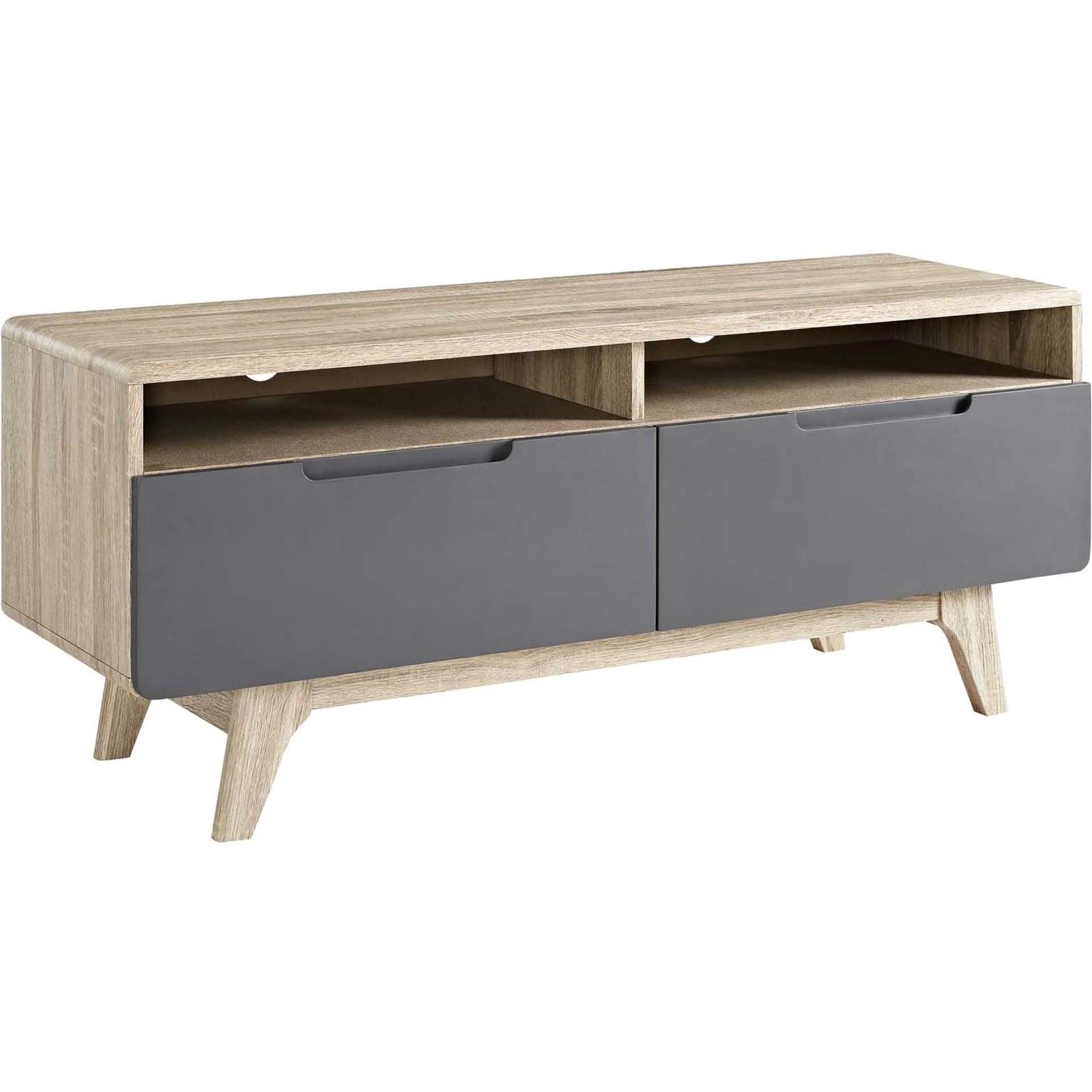

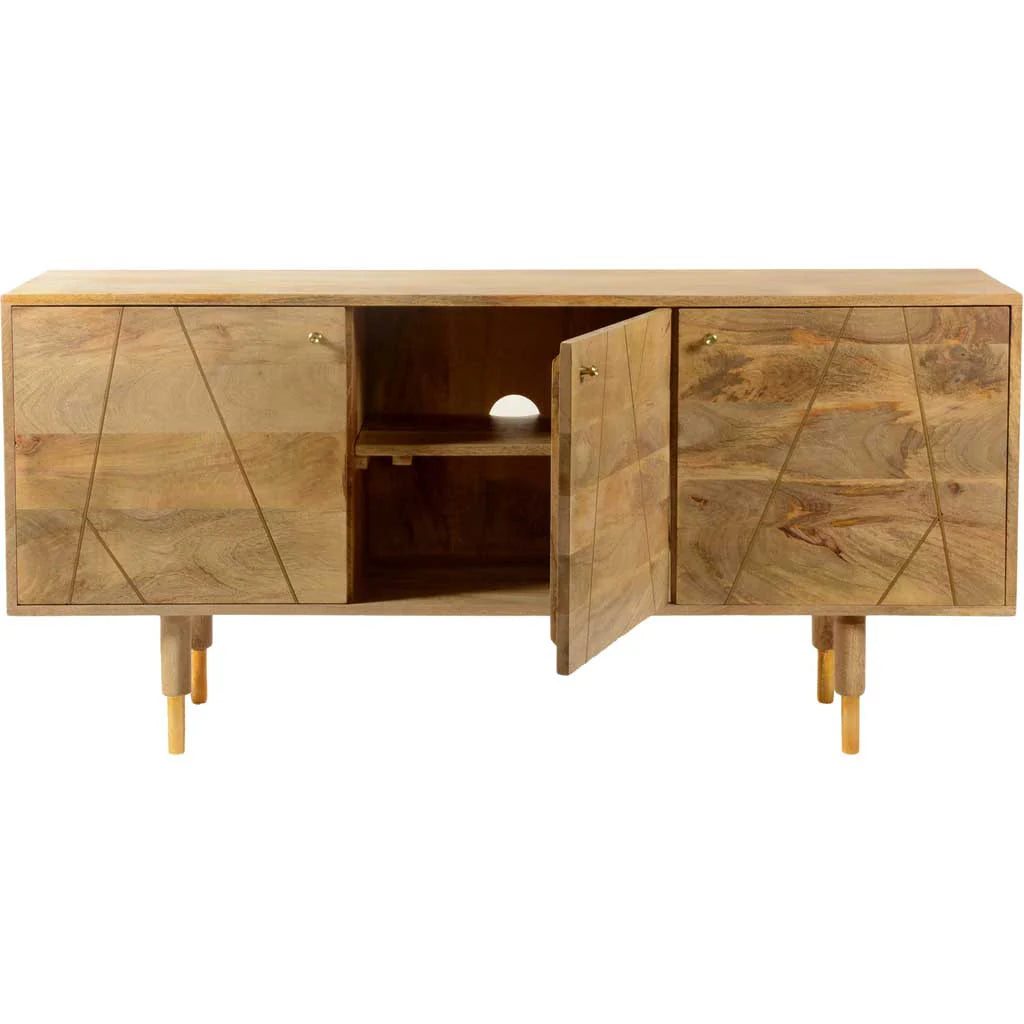

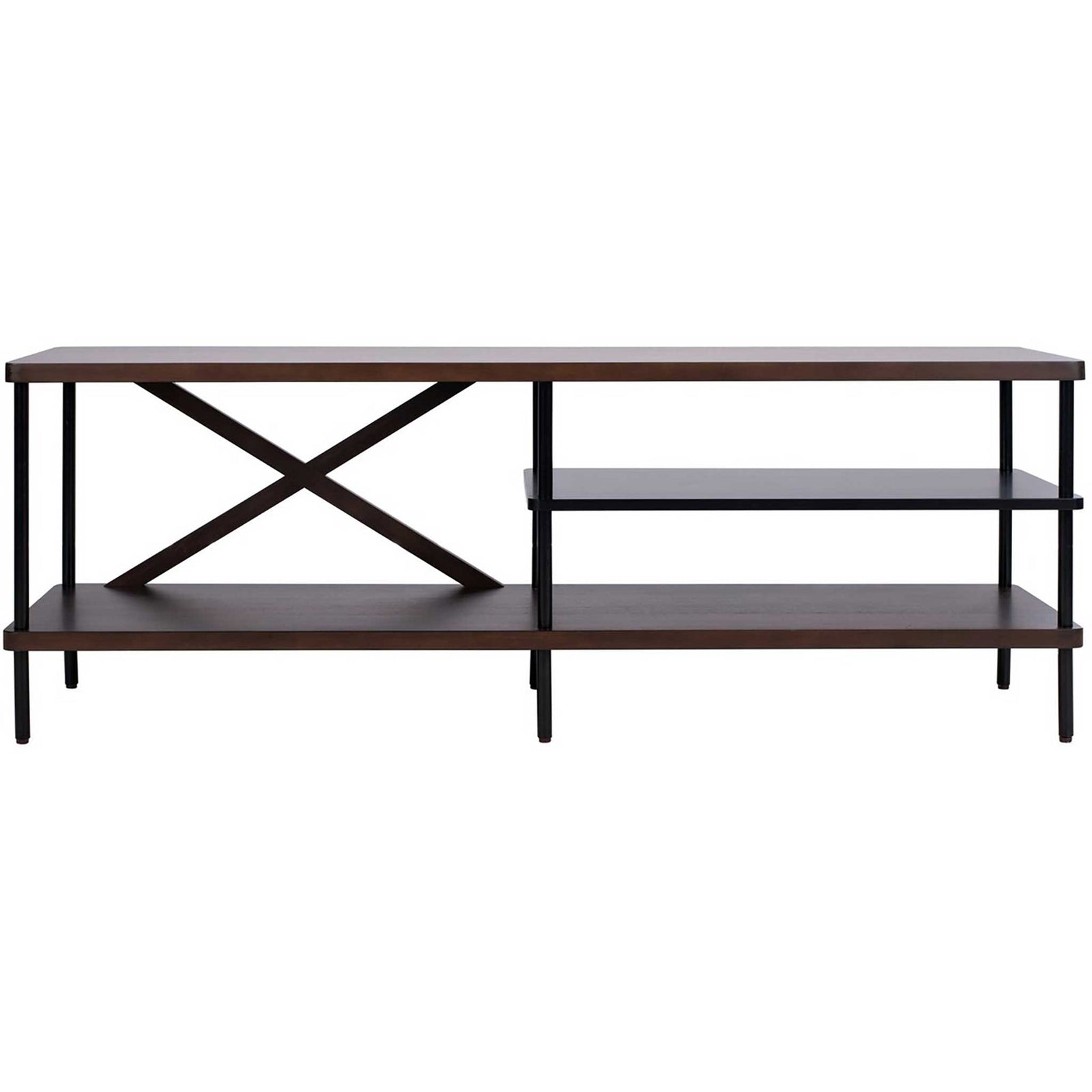

Common TV Stand Sizing Mistakes to Avoid
- Going too narrow on the TV stand width: Choosing a stand that has the same dimensions as your TV can make your entertainment center look too heavy and unstable.
- Ignoring the seating height and viewing distance: If you skip this step, it will lead you on having a TV stand that's too tall or too short. This may leave you with neck strain from constantly looking up and down at your screen.
- Skipping on ventilation space: Pushing your components or gaming consoles against a closed back panel might seem like a smart way to save space, but it actually does the opposite. Without airflow, you're welcoming your gadgets into overheating.
- Forgetting the accessories: Always include the sizes of your gaming console or AV receivers when choosing a TV stand to save yourself from hassle.
- Assuming every "standard" TV stand fits all: Not every TV follows the same dimensions. Don't rely on the size listed on the sticker or box of the TV. It's a diagonal screen measurement, not the TV's actual width or depth.
Frequently Asked Questions
Can a TV stand be smaller than the TV?
Yes, a TV stand can be smaller than your TV, but only if your television is safely mounted to the wall above the stand or if you have a 32-inch or smaller TV. Any TV larger than a 32-inch TV would be at significant risk of being knocked over if the stand is narrower. Even with a 32-inch TV, if it's not wall-mounted, we still recommend a stand that's a bit wider than its horizontal width of around 28 inches.
How much bigger should a TV stand be than the TV?
A TV stand should be at least 3 to 8 inches bigger on each side than your television. The bigger the TV, the more space on each side you'll want. In this way, it keeps your TV from looking unsteady, which leaves extra space for your soundbars, consoles, or those little aesthetic decor items you're itching to add.
What are the standard dimensions of a TV stand?
Most standard TV sizes range from 48 to 60 inches in width, 14 to 16 inches in depth, and 18 to 26 inches in height.
Leave a comment
Comments will be approved before showing up.


Bed and Mattress Size Guide: Dimensions and How to Choose
Compare standard US mattress sizes, from Twin to California King, and learn how much room your complete bed frame really needs. Our illustrated guide covers bedroom clearances, sleep/seated bed height, and the measurements to check before ordering.


Polypropylene Rugs Guide: Pros, Cons & Best Use Cases
Polypropylene rugs are budget-friendly, stain-resistant, and easy to maintain — but there's more to consider before buying one. Discover their pros, cons, care tips, and the best rooms to use them in when you shop.


Boho Interior Design Guide: Colors, Furniture & Decor Tips
Learn how to style your home in boho interior design, from warm color palettes and textiles to furniture, lighting, plants, and wall decor. Explore popular bohemian styles and get room-by-room decorating tips for a cozy, personalized space.


What Colors Go With Brown: Top Palettes By Material & Style
Wondering what colors go well with brown? We cover major colors that complement brown, from creamy off-whites to sage green. Our post also touch on best color pairings for brown-colored materials like wood, leather, fabric.


TV Stand Size Guide: Find the Ideal Width, Depth, and Height
Not sure what size your TV stand should be? Read our TV stand size guide to learn practical tips on what width, depth, or height the stand should be based on your TV size, viewing distance, and accessories.


Coffee Table Height & Size Selection Guide
Discover the ideal coffee table height, width, and depth for your living room or lounge area. Learn about the standard coffee table dimensions, measuring rules relative to couches and other nearby furniture, and proper fit based on spacing and room layout.


Mid-century Modern Interior Design 101: Decor Ideas & Design Tips
Discover the essentials of mid-century modern interior design. We cover its defining features, iconic furniture pieces, suitable art and decor, color palettes, and much more. Get simple decorating tips and architectural guidelines to get the perfect MCM look.


Dining Table Height, Bar Height, and Counter Height Guide
Identify the ideal height ranges for dining tables, bar tables, and counter tables, along with the proper seat heights for the chairs and stools to pair with them. Learn to choose a slightly lower or taller table based on use cases, family members, armrests, and more.